July 11, 2026 · 9 min read
From Instagram Inspiration to Finished Dress: How We Turn a Client's Idea Into a Production-Ready Garment
A behind-the-scenes walkthrough of our custom clothing manufacturing process — from a viral Instagram reference to fabric sourcing, trims, tech pack, sampling, revisions, quoting and bulk delivery. MOQ 30 pcs, no design fee.
Key takeaways
- A single inspiration photo is enough to start; patternmaking and fabric selection happen on our side.
- The workflow is: reference image, fabric recommendation and quote, pattern and sample, fit correction, bulk production, QC.
- Expect one to two sample rounds before bulk; each round takes roughly 7-10 days.
- Fabric choice drives 60-70% of whether a copied silhouette looks like the reference.
- LinenTailor runs this process from 30 pieces per colour with no design or tooling fee.
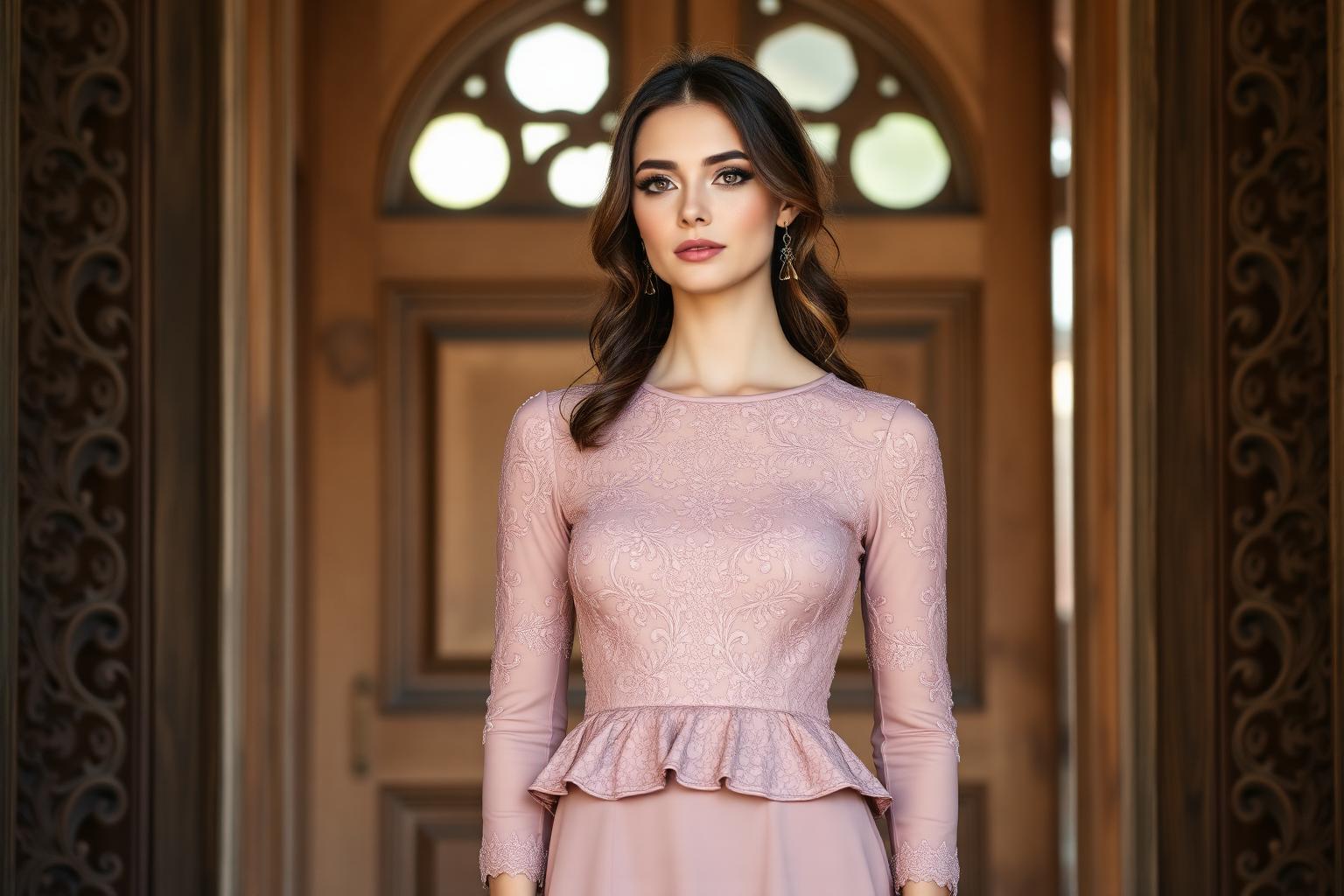
A client recently sent us a screenshot of a viral Instagram post — a dusty pink lace peplum dress with long sleeves and a soft floral hem print. The message was short: "Can you help me make something like this for my brand, from 30 pieces?" The answer was yes — and this article walks through exactly how we did it, step by step. If you're a designer, boutique owner or emerging label wondering how a low-MOQ clothing manufacturer actually turns a mood-board image into a shippable product, this is the full playbook we use at LinenTailor.
Step 1 — The brief: understanding what the client actually wants
Every custom clothing project starts with a conversation, not a spec sheet. When a client sends us a reference image, we ask a short set of qualifying questions on WhatsApp:
- Which details matter most — the silhouette, the lace pattern, the peplum shape, the sleeve length, or the printed hem?
- What is the target retail price, and therefore the target FOB cost?
- How many colours, sizes and total pieces for the first order?
- Any size chart, brand label, or packaging requirements?
- Delivery window and destination market (for duties, labelling and compliance).
This 10-minute chat replaces days of back-and-forth email. The goal isn't to copy the reference — it's to translate the feeling of the reference into a garment the client owns.
Step 2 — Sourcing the right fabric and lace
The reference dress mixed two textiles: a stretch corded lace for the bodice, and a lightweight printed base for the skirt. Our sourcing team pulled candidates from three places:
- Our in-house linen fabric library for the base — we proposed a lightweight 140 gsm linen-viscose blend for drape and softness (see the trade-offs in our pure linen vs. linen blends guide).
- Two trusted lace mills in Guangdong for the corded lace — we pulled 4 colourways within the client's palette.
- A digital-print partner for the floral hem, using pigment inks that meet OEKO-TEX Standard 100.
Within 5 working days, the client had a swatch pack in hand: 3 lace options, 2 base fabric options, and printed strike-offs of the floral hem in two scales. Total cost at this stage: shipping only. No design fee, no minimum commitment.
Step 3 — Trims, construction and the tech pack
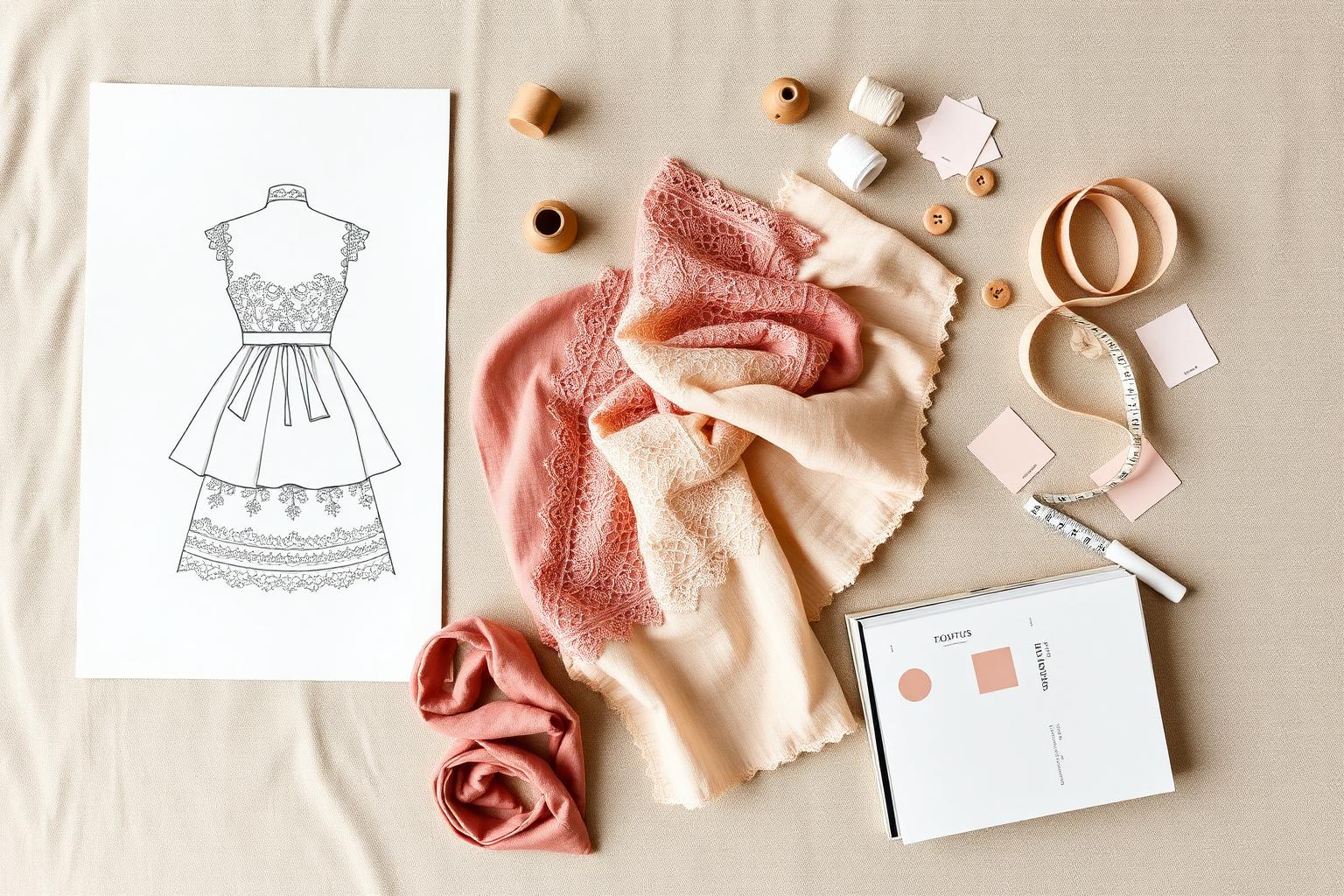
Once the fabrics were chosen, our patternmaker built a full tech pack — the document that turns a mood image into a garment a factory can actually cut and sew. It included:
- Flat sketches (front, back, side) with construction callouts.
- Measurement chart across the client's size range (XS–XL, with grading rules).
- Bill of materials: main lace, base fabric, lining (breathable cotton cupro), interfacing, invisible zip, thread shades, care label, woven brand label, hang tag.
- Stitching specs: French seams on the bodice, bias-bound armholes, hand-tacked peplum lining.
- Print placement diagram for the digital floral hem.
This tech pack is the single source of truth for sampling, bulk and quality inspection. It also protects the client — every future production run reproduces the same garment, regardless of who's on the sewing line.
Step 4 — Quoting: what a small-batch price actually includes
With the tech pack finalised, we quoted two scenarios so the client could see the impact of quantity:
- 30 pcs per colour (our standard low-MOQ clothing manufacturing tier) — the entry point for testing a design in-market.
- 100 pcs per colour — roughly 18% lower FOB unit price thanks to better lace and print utilisation.
The quote itemised fabric, lace, print, trims, labour, private-label branding and packaging. There were no hidden tooling fees — pattern development is included when the client proceeds to sampling.
Step 5 — Sample making and the revision loop
We produced the first sample in 12 days. Two revisions followed — this is normal and expected:
- Revision 1: the peplum was 1.5 cm too long and the sleeve cap sat slightly high. Fixed on the pattern; second sample shipped a week later.
- Revision 2: the client wanted the floral print scale increased 15% and shifted 4 cm higher on the skirt. A digital strike-off was approved before cutting the final sample.
Every sample was sent by express shipping with a video walkthrough of the construction, and every change was logged into the tech pack. The client approved the third sample and signed off on the pre-production sample (PPS).
Step 6 — Bulk production and quality control
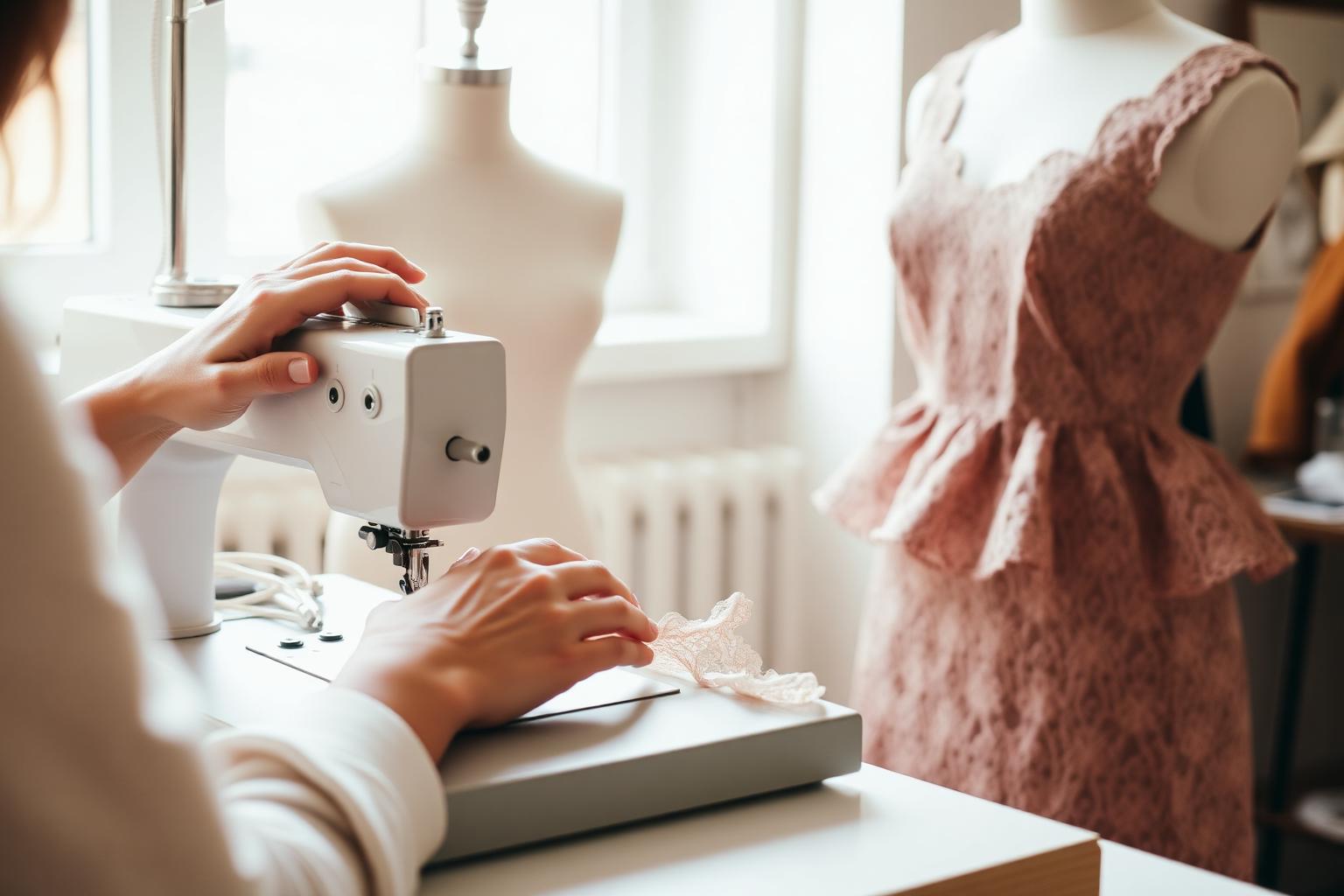
Bulk started the day after PPS approval. For a 30–100 piece run, our workflow is:
- Fabric and lace inspection on arrival (4-point system).
- Digital marker and single-layer cutting for small runs — reduces waste and mis-matched lace.
- Sewing on a dedicated small-batch line so the whole order moves together (no drift between the first and last piece).
- In-line inspection at three points, plus 100% final inspection — every single garment measured, checked and steamed before packing.
- Care label + woven brand label + hang tag applied to the client's spec.
- Folded, poly-bagged, and packed into master cartons ready for air or sea freight.
Step 7 — Delivery and after-sales
The full 30-piece order shipped 26 days after PPS approval, DDP to the client's warehouse. We provide:
- Photos and video of the packed order before it leaves the factory.
- Master carton dimensions, gross/net weight, and HS code guidance for customs.
- A digital archive of the tech pack, PPS photos and inspection report — so the client (or any future partner) can reproduce the style.
- A no-questions free re-make policy on any piece that fails our own QC standard once it arrives.
Total timeline: from Instagram screenshot to boxes on a shelf
- Brief + fabric sourcing: 5 days
- Swatch shipping + tech pack: 7 days
- Quoting + PO: 2 days
- Sample 1 + 2 revisions + PPS approval: 25 days
- Bulk production + QC: 21 days
- Freight (DDP air to EU): 5 days
Total: roughly 9 weeks from screenshot to shelf, for a fully custom lace dress produced at MOQ 30 per colour.
What clients don't need to bring
One of the most common misconceptions we hear from first-time brands is that they need a fully formed collection, technical drawings, or an existing size chart to work with a manufacturer. They don't. Bring one of the following and we can start:
- A single reference image (Instagram, Pinterest, a photo of a garment you own).
- A rough sketch and a colour word — "olive", "clay", "washed indigo".
- A finished garment you'd like to remake or improve.
We handle patternmaking, grading, fabric sourcing, trims, packaging and compliance in-house or through vetted partners. For a broader view of how to evaluate any manufacturing partner before you send them your ideas, see how to find an ethical clothing manufacturer.
Ready to develop your own design?
LinenTailor is a small-batch custom clothing manufacturer in Dongguan, China, specialising in linen, linen blends and lace-based womenswear. We operate a cut-and-sew workshop in Dongguan, with fabrics sourced from trusted linen mills. OEKO-TEX Standard 100 certified linen and organic cotton certified fabrics are available on request. We take custom orders from 30 pieces per colour — with no design fee, no tooling fee, and a full sample-before-bulk workflow. Send us your inspiration image on WhatsApp, or start with our MOQ 30 program page or the linen fabric library.