August 6, 2026 · 12 min read
How a New Fashion Brand Chooses the Right Factory (2026 Guide)
A practical framework for new and emerging fashion brands on how to choose the right clothing factory — matching factory type to your stage, the five numbers to ask for, red flags, sample testing, and a first-order checklist.
Key takeaways
- Match the factory to your stage: for a first collection you need a small-batch atelier that accepts 30 pieces per colour, not a 500-piece export mill.
- Ask five numbers before anything else: MOQ per colour, fabric minimum, sampling cost and lead time, bulk lead time, and payment terms.
- Fabric minimums, not garment minimums, are what usually kill a new brand's first order — always ask them separately.
- A factory that answers technical questions with technical answers within 24 hours will almost always produce better goods than one that only sends prices.
- Never place bulk without an approved pre-production sample and a written AQL inspection standard.
- Run a paid sample with two or three shortlisted factories; it is the cheapest due diligence you will ever buy.
Choosing a factory is the first irreversible decision a new fashion brand makes. Your fabric can change, your pricing can change, your website can be rebuilt in a weekend — but a bad first production run costs you cash you do not have, a season you cannot get back, and customers who will not give you a second chance. This guide is the framework we give new brands who come to us with a sketch and no supply chain: how to match a factory to your stage, what to ask, what to test, and what to sign.
Quick answer
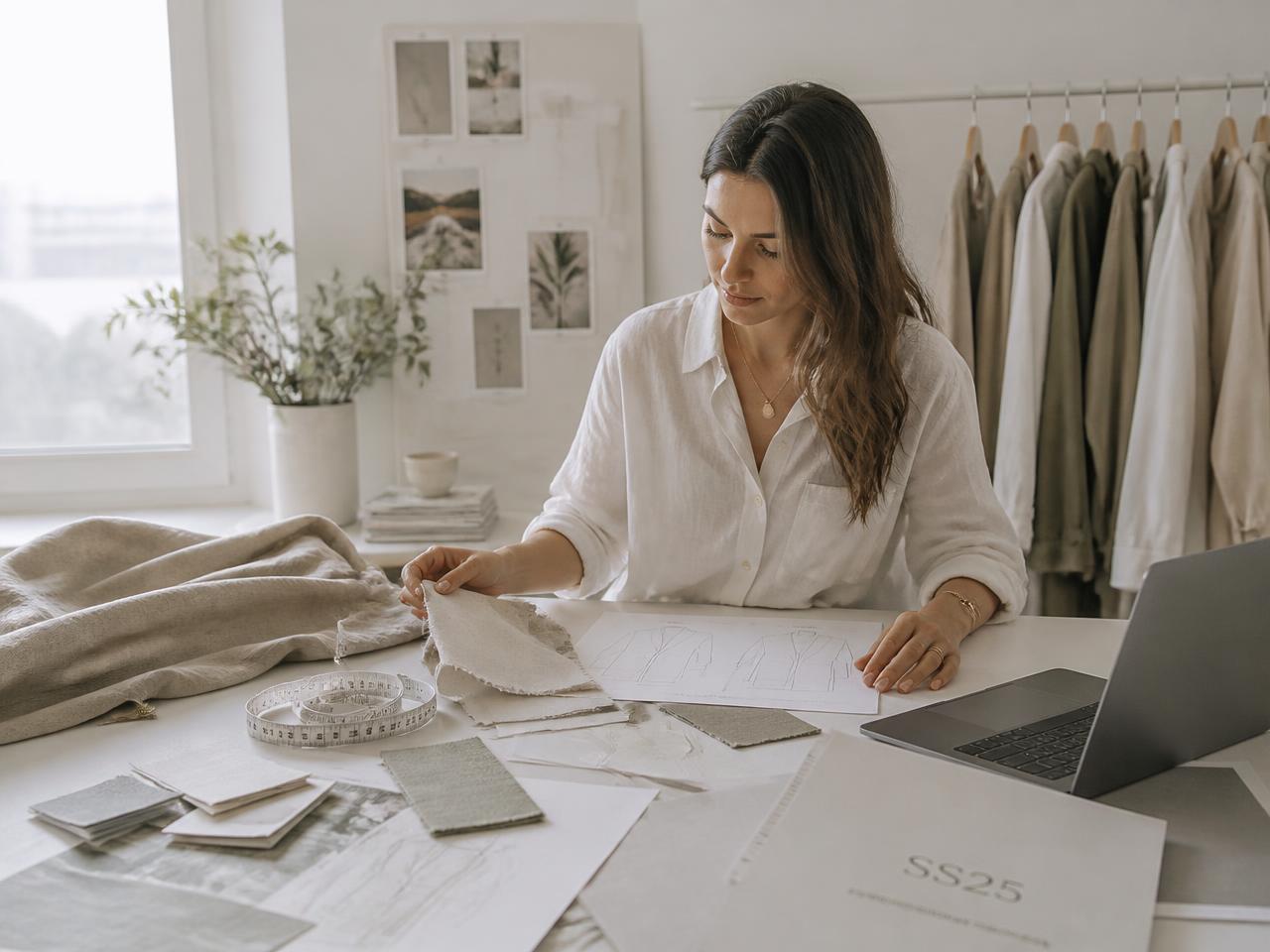
A new brand should choose the smallest competent factory that can make its product category well. In practice that means a small-batch atelier accepting 30–50 pieces per colour, with its own pattern maker, in-house or partnered fabric supply, and a named person who answers technical questions in your language within 24 hours. Big factories are not better factories for a first collection — they are simply built for a customer you are not yet.
1. Match the factory type to your stage
Every factory is optimised for a volume band. Pushing against that band is what produces bad quotes, ignored emails and disappointing goods.
| Factory type | Typical MOQ / colour | Best for | Watch out for |
|---|---|---|---|
| Sample room / studio | 1–10 | Prototypes, made-to-order, one-off pieces | Unit cost too high for retail margins |
| Small-batch atelier | 30–50 | First collections, capsules, colour testing | Limited capacity in peak season |
| Mid-size factory | 150–300 | Second and third seasons, repeat bestsellers | Slow to develop new styles |
| Large export factory | 500–1000+ | Scaled wholesale and retail programs | New brands get deprioritised behind big accounts |
If you are launching with four styles in two colourways, you need roughly 240 pieces total at MOQ 30 — a viable, fundable first order. The same collection at a 500-piece MOQ is 4,000 pieces of inventory risk. That single number decides whether your brand launches this year.
2. The five numbers to ask for — in this order
- Garment MOQ per style, per colour. Per colour is the number that matters. "MOQ 100" that means 100 total across colours is very different from 100 each.
- Fabric minimum. This is the hidden killer. A factory can accept 30 garments and still require a 300-metre fabric order because the mill will not weave less. Ask: "Do you hold this fabric in stock, and what is the minimum cut?" Factories with their own fabric library — as we do — can release small quantities without a mill run.
- Sampling cost and lead time. Expect USD 60–150 and 7–14 days per woven style. Free samples are usually a sign the cost is buried elsewhere.
- Bulk lead time after sample approval. 25–45 days is normal for small-batch linen. Anything under 15 days should be questioned; anything over 70 days needs an explanation.
- Payment terms. 30% deposit / 70% before shipment is the industry standard. 100% upfront from a new supplier is a risk you do not need to take.
3. Separate real factories from trading companies
Roughly two-thirds of the "factories" on B2B marketplaces are trading companies. They are not automatically bad — a good agent adds real value — but you should know which one you are talking to, because it changes who controls quality and how much margin sits between you and the sewing machine.
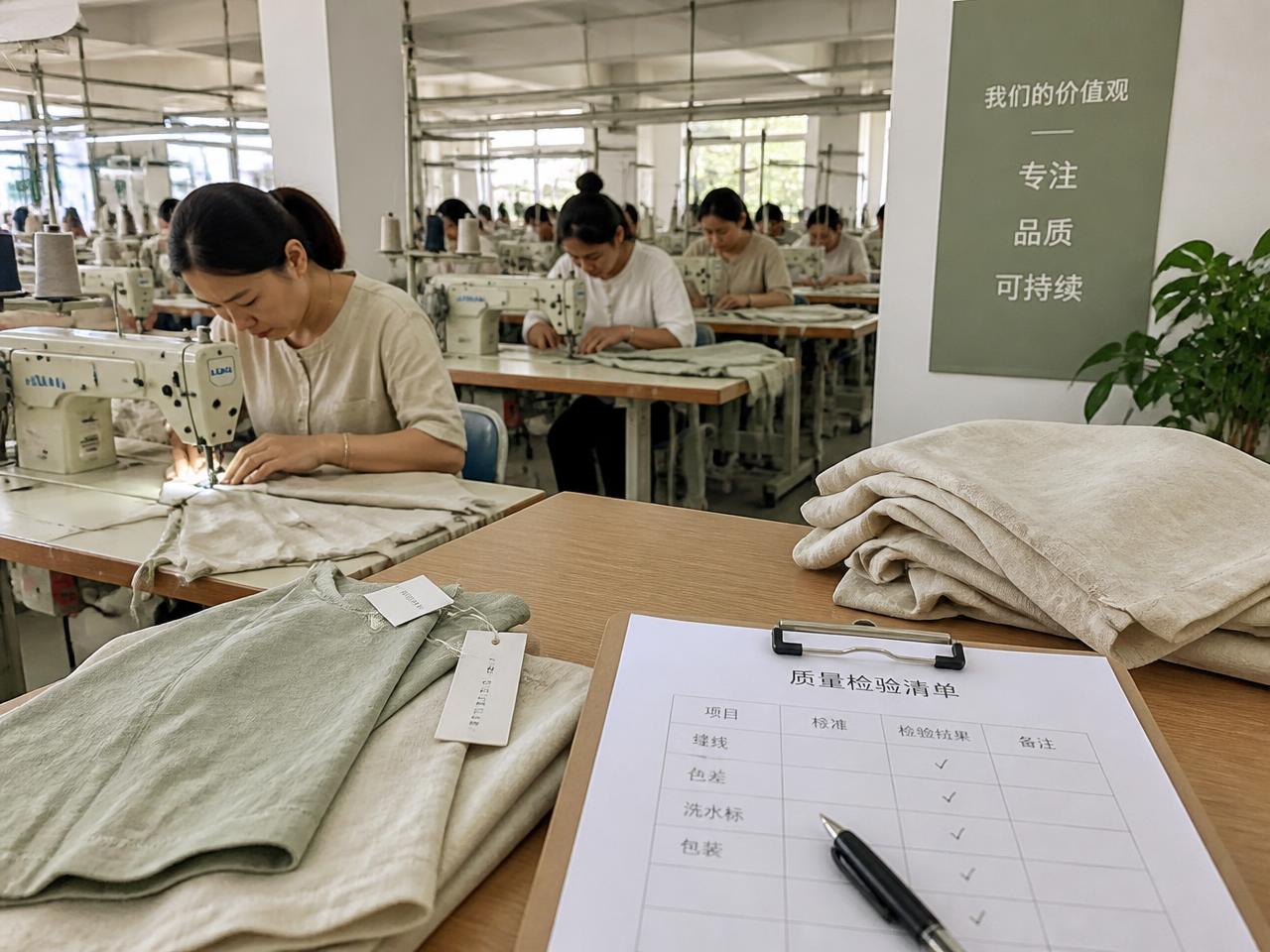
- Ask for a live video walkthrough of the sewing floor, not a recorded file. Ask them to walk to the cutting table and the QC table.
- Ask how many machines and workers are in the building, and how many lines run at once.
- Ask who makes the patterns. An in-house pattern maker means fit problems are solved in hours, not weeks.
- Ask for the business licence, audit and certification documents (OEKO-TEX Standard 100, ISO 9001, BSCI, GOTS where relevant) with the entity name on them — and check the name matches the company invoicing you.
4. Test communication before you test quality
Communication quality predicts production quality more reliably than any certificate. Send the same detailed enquiry to three shortlisted factories and score the replies:
- Did they answer every question, or only price?
- Did they ask you clarifying technical questions (GSM, wash, seam finish, size range)? Good factories interrogate the brief.
- Did they reply within 24 working hours from a named person, not a generic account?
- Did they volunteer a constructive objection — "this fabric will bag at the knee, use a heavier weight"? That is expertise, and it is worth paying for.
5. Red flags worth walking away from
- Price quoted before any construction detail is discussed.
- Refusal to do a paid pre-production sample.
- No written spec sheet or measurement tolerances.
- Changing the fabric "to something similar" without written approval.
- Vague answers about where the fabric comes from.
- Payment requested to a personal account rather than the company entity.
6. Buy the sample — from two factories
Running a paid development sample with two or three shortlisted suppliers costs a few hundred dollars and answers questions no call can. When the samples arrive, judge them on: seam straightness and stitch density, how the fabric matches the swatch you approved, whether measurements sit inside tolerance, label and finishing quality, and — critically — how the factory responded to your correction comments. A factory that fixes a fit note precisely on the second sample is the one to give your bulk order.
7. Lock the first order in writing
Before the deposit leaves your account, confirm in writing: the approved pre-production sample, the graded size spec with tolerances, fabric composition and GSM, the colour approval method, the AQL inspection level, packing and labelling, the shipping date, payment terms, and the remedy if goods fail inspection. This is a one-page document, not a legal saga, and it prevents almost every dispute we have ever seen.
Realistic timeline for a first collection
- Weeks 1–2: brief, shortlist, quotes.
- Weeks 3–5: fabric swatches and first samples.
- Weeks 6–8: corrections and pre-production sample approval.
- Weeks 9–14: bulk production and in-line QC.
- Weeks 15–17: final inspection, packing, shipping.
Budget four to five months from first contact to landed inventory. Reorders of an approved style compress to 6–8 weeks.
Working with LinenTailor
LinenTailor is the brand of Dongguan Jianmai Supply Chain Co., Ltd., a small-batch linen production partner in Dongguan, China. We hold MOQ 30 pieces per colour for apparel and MOQ 1 for home textiles, run our own linen mill and cut-and-sew workshop, and keep a fabric library of 100+ linen qualities so you are never blocked by mill minimums. Fabrics are OEKO-TEX Standard 100 certified and free swatch cards ship worldwide.
Send a sketch, tech pack or reference photo and we quote within 24 hours — message us on WhatsApp, browse the linen fabric library, or try AI Fabric Match to find the right fabric from a style photo.
Related reading: how to find a clothing manufacturer, why MOQ 30 works for new brands, and how to vet an ethical manufacturer.