October 24, 2026 · 8 min read
Linen Fabric Defects vs Natural Slubs: An AQL 2.5 Inspection Guide
Tell natural linen slubs from real fabric and sewing defects, read an AQL 2.5 sampling plan for 30–50 piece orders, and write tolerances that prevent disputes.
Quick answer
Slubs, small flax specks and slight tonal variation are natural linen characteristics, not defects, when they match the approved reference swatch. Holes, broken ends, shade banding, stains, severe skew and out-of-tolerance measurements are defects. AQL 2.5 is a sampling rule from ISO 2859-1: for a 26–50 piece lot at general level II, 8 pieces are checked and one major defect rejects the lot. Agree defect definitions and tolerances in writing before bulk.
Key takeaways
- Approve a physical reference swatch: it defines what 'natural character' means for your order.
- Classify defects as critical, major or minor before production, not at final inspection.
- AQL 2.5 is a sampling limit, not a guarantee that every garment is perfect.
- For a 26–50 piece lot (ISO 2859-1, level II, normal), 8 pieces are sampled; accept 0, reject 1 major defect.
- Write shrinkage and measurement tolerances after a wash test; untreated linen typically shrinks 3–7%, pre-shrunk 1–3%.
Why linen inspection causes so many disputes
Linen is spun from flax fibres of uneven length and thickness. That is what gives it texture, and it is also why a buyer opening a first carton can mistake character for a fault. Most quality disputes we see on small linen orders are not about workmanship at all: they come from nobody writing down what "acceptable" looks like before cutting started.
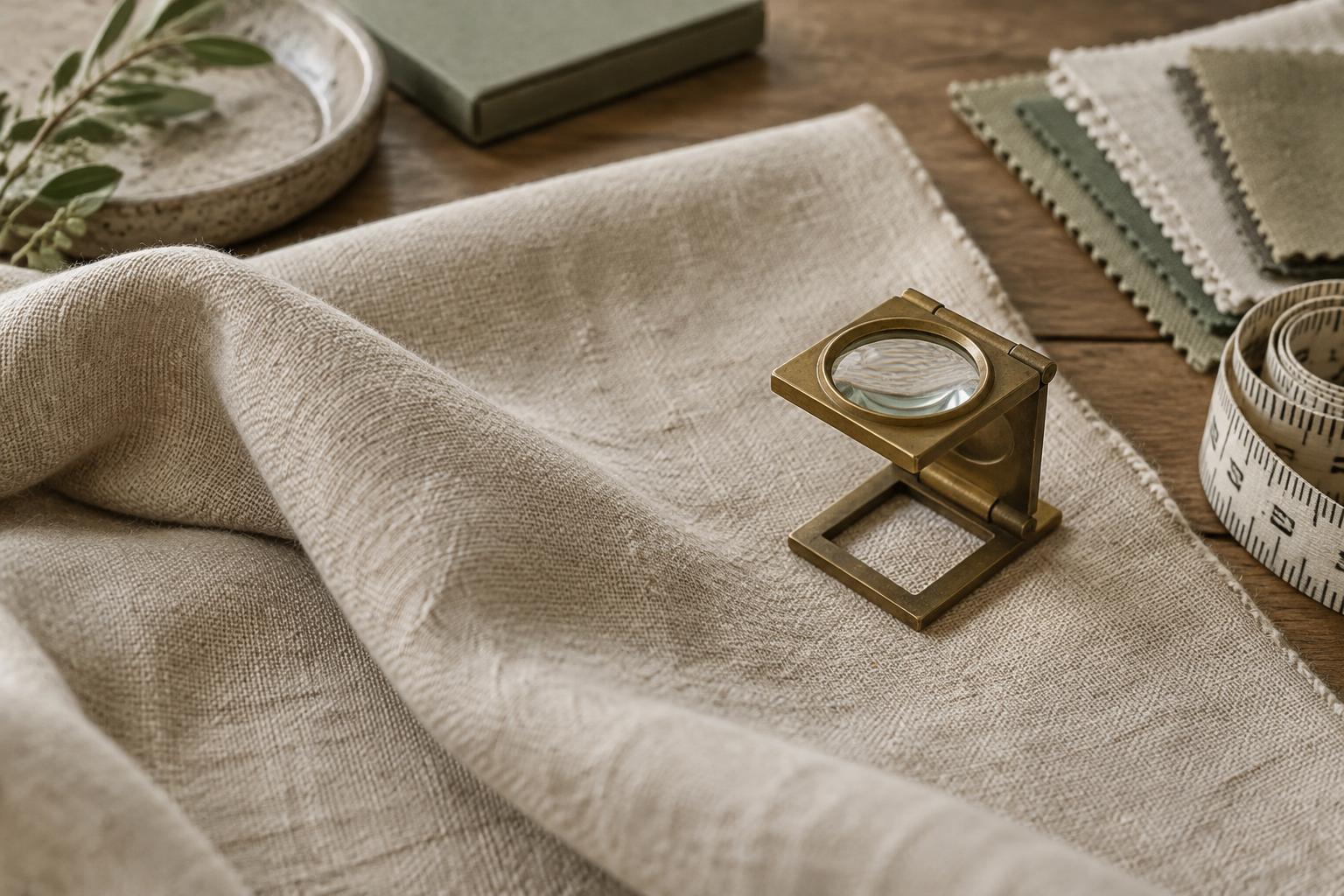
Natural characteristics vs real defects
| Usually accepted (natural) | Usually rejected (defect) |
|---|---|
| Slubs and thick-thin yarn within the reference swatch | Very large or clustered slubs well beyond the reference |
| Small dark flax specks (shive) in undyed or light linen | Holes, broken or missing ends, floats |
| Slight tonal variation across a washed fabric | Shade banding or colour difference between panels of one garment |
| Soft creasing after washing | Permanent crease marks, heavy weaving bars, stains |
| Shrinkage within the written specification | Severe skew or bowing that twists seams; measurements out of tolerance |
The rule of thumb: if it matches the approved swatch and sample, it is character. If it changes how the garment looks from normal viewing distance, fits, or lasts, it is a defect.
Step 1: Check the fabric before cutting
Our cut-and-sew workshop in Dongguan works with linen sourced from trusted linen mills, so incoming fabric is the first checkpoint. A common method is the 4-point system, where faults are scored from 1 to 4 points by length and totalled per 100 square yards. The pass threshold is a commercial agreement, so write it down for your order.
- Compare the roll against the approved reference swatch for colour, hand-feel and slub level.
- Re-check width and GSM, especially after pre-shrinking or washing.
- Run a wash test on a fabric panel and record length and width shrinkage. See our linen shrinkage guide for the test method.
- Cut panels of one garment from the same roll where possible to avoid shade differences.
Step 2: Classify defects before production
- Critical — a safety or legal risk, for example a needle fragment or a sharp broken trim. Zero tolerance.
- Major — likely to cause a return: holes, open seams, wrong measurements, obvious stains, shade difference between panels, a broken button.
- Minor — a small deviation unlikely to cause a return: a short loose thread, a small uneven stitch in a hidden area.
Step 3: Read an AQL 2.5 sampling plan for small batches
AQL stands for acceptance quality limit. Under ISO 2859-1, the lot size and inspection level give a code letter, which sets the sample size and the accept/reject numbers. AQL 2.5 for major defects is widely used for apparel.
| Lot size | Code letter (level II) | Pieces sampled | AQL 2.5: accept / reject |
|---|---|---|---|
| 26–50 | D | 8 | 0 / 1 |
| 51–90 | E | 13 | 1 / 2 |
For a 30-piece colourway, a sample of 8 is a small share of the lot. That is why many small-batch brands agree an additional check on key measurements and visible faults, on top of the AQL sample. Whatever you choose, agree it before production.
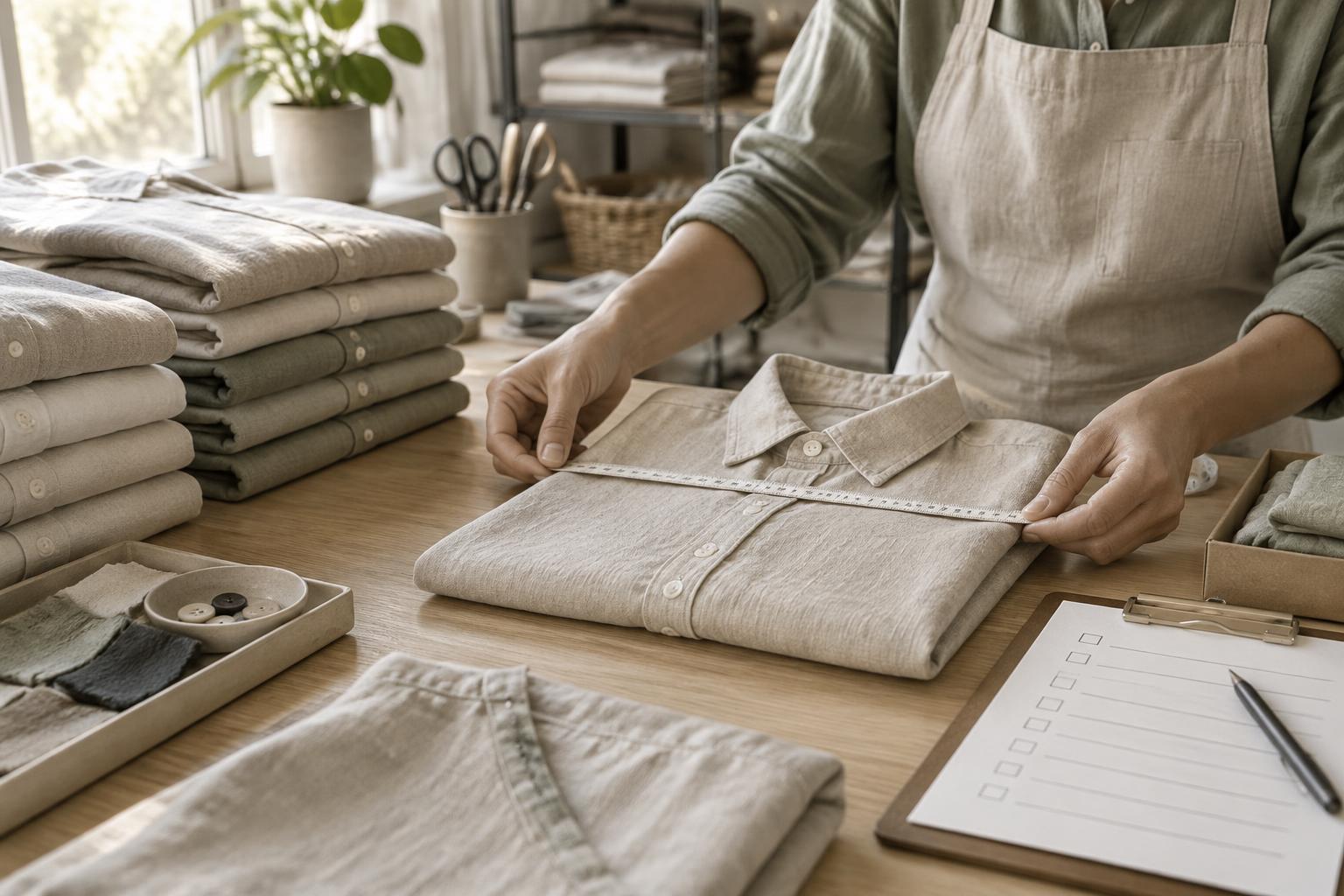
Step 4: What to check on finished linen garments
- Key measurements against the graded spec and tolerances.
- Seams: open seams, puckering, skipped stitches, stitch density (SPI) as specified.
- Seam slippage at stress points such as seat, armhole and side seams, a known risk in loosely woven linen.
- Shade consistency between front, back, sleeves and collar.
- Buttons, buttonholes, labels and care labels.
- Pressing, folding and packing as agreed.
Step 5: Write it into your tech pack
- Approved reference swatch and pre-production sample photos.
- Graded measurements with a tolerance for each point of measure.
- Wash test method and the shrinkage allowed after it.
- Critical, major and minor definitions.
- AQL level, inspection level and who inspects.
If you are still at the sample stage, read how to avoid failed linen samples and our linen apparel sampling process and costs. For production minimums, see our small-batch linen clothing manufacturer page: apparel starts from 30 pieces per colour with mixed sizes.
Next step
Send your tech pack and reference photos and we will reply with a human-reviewed quote within 24 hours, including how inspection will be handled for your order.
Ready to produce private-label linen pants or trousers after inspection? See our private label linen pants manufacturer (MOQ 30) page.
Frequently asked questions
Are slubs in linen a defect?
No. Slubs are thicker sections of flax yarn and are a natural characteristic of linen. They become a defect only when they are unusually large, clustered, or outside the approved fabric standard or reference swatch. Agree the reference swatch before bulk.
What does AQL 2.5 mean for a linen apparel order?
AQL 2.5 is an acceptance quality limit used in ISO 2859-1 sampling plans. It sets how many major defects are allowed in a random sample before a lot is rejected. It is a sampling rule, not a promise that every garment is perfect, so define what counts as critical, major and minor in writing.
How many pieces are checked in a 30–50 piece order under AQL 2.5?
Under ISO 2859-1 general inspection level II with normal single sampling, a lot of 26–50 pieces uses code letter D: 8 pieces are checked, and at AQL 2.5 the lot is accepted with 0 major defects and rejected at 1. Many small-batch brands also agree a tighter check on measurements and visible faults.
Which linen fabric faults should be rejected?
Commonly rejected faults include holes, broken or missing ends, heavy weaving bars, shade banding across panels, visible stains, severe skew or bowing, and colour differences between parts of one garment. Natural slubs and slight tonal variation within the approved standard are usually accepted.
Is shrinkage after washing a defect?
Shrinkage within the agreed specification is not a defect. Untreated woven linen typically shrinks about 3–7%; pre-shrunk linen typically retains about 1–3%. Measurements outside the tolerances written in your tech pack after the agreed wash test are a measurement defect.
What should I put in my tech pack to avoid quality disputes?
Include the approved reference swatch, graded measurements with tolerances, the wash test method, critical/major/minor defect definitions, the AQL level and sampling plan, and photos of the approved pre-production sample. Clear written standards prevent most disputes at final inspection.