July 26, 2026 · 9 min read
The Designer's Guide to Linen Fabric Weights and Weaves (GSM, Handle & Best Uses)
Understand linen fabric by GSM weight and weave — from 90 gsm handkerchief linen to 400 gsm upholstery — with hand feel, drape, transparency and the right end-use for shirts, dresses, trousers, curtains and bedding.
Key takeaways
- Linen weight is measured in GSM: 110-150 GSM is shirting, 160-200 GSM is the all-round dress and trouser range, 220 GSM+ is jackets, upholstery and heavy home textiles.
- Plain weave is the default for apparel; twill adds drape and durability; herringbone and basketweave add texture and body.
- Enzyme-washed linen feels soft immediately but loses 3-5% in length, so always confirm shrinkage before grading patterns.
- For semi-sheer garments, pick 150 GSM or above, or plan a lining.
- Ask for a swatch before committing: hand feel at the same GSM varies significantly between mills.
Two pieces of "100% linen" can behave completely differently — one drapes like a silk slip, the other stands up like canvas. The difference is weight (measured in GSM — grams per square metre) and weave (how the warp and weft interlace). Get these two right and your sample will match the mood board on the first try. Here is the working reference we use inside our atelier when speccing linen for shirts, dresses, trousers, curtains and bedding.
What GSM actually means
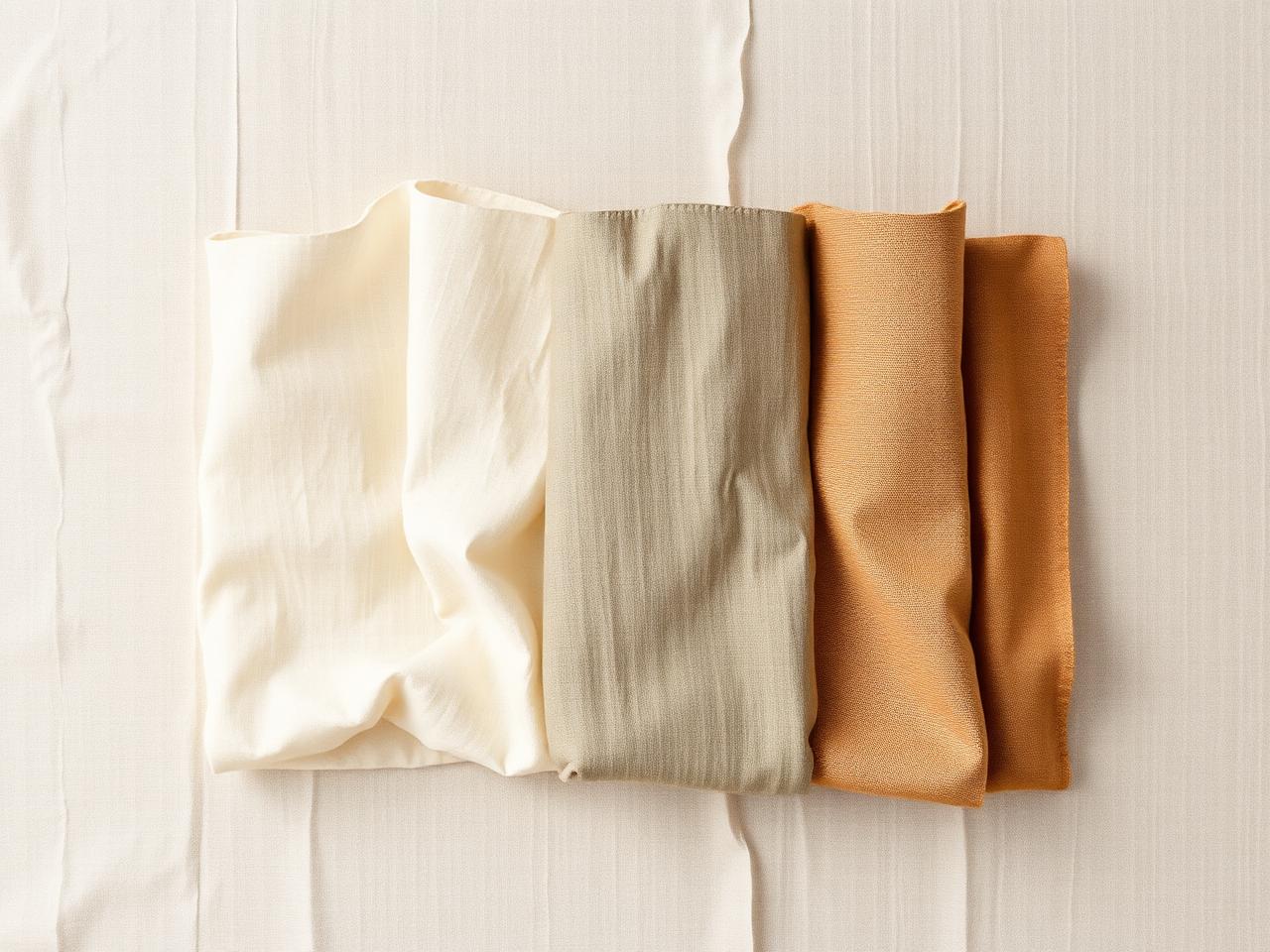
GSM = grams per square metre. A higher number means a heavier, denser fabric — more yarn per unit area. In woven linen, GSM is the single most useful spec to predict how a fabric will drape, wrinkle, hold shape and photograph. Yarn count (Nm/Ne) and thread density refine it, but GSM alone gets you 80% of the way to the right fabric.
As a rule of thumb for pure linen:
- Under 130 gsm — sheer to lightweight, fluid drape, may be transparent.
- 130–180 gsm — the "everyday" shirt and dress weight.
- 180–240 gsm — trouser, jacket and heavy shirt weight.
- 240–320 gsm — bottom-weight, tailoring, structured home textiles.
- 320 gsm and above — upholstery, slipcovers, aprons, workwear.
Linen by weight — a practical chart
1. 90–120 gsm · Handkerchief & voile linen
- Hand feel: paper-thin, crisp, dry; softens to silk-like fluidity after washing.
- Look: semi-transparent; needs lining or layering for opaque garments.
- Best for: summer blouses, scarves, romantic dresses, sheer curtains, baby wear, handkerchiefs.
- Watch out for: puckering seams — use a fine microtex needle (60/8 or 70/10) and 100% cotton or silk thread.
2. 130–170 gsm · Shirt-weight linen
- Hand feel: soft, breathable, the classic "washed linen" hand.
- Look: opaque in mid tones, slightly translucent in white.
- Best for: button-down shirts, camp collars, summer dresses, kaftans, kidswear, light bedding.
- Also known as: "European shirt linen", "washed French linen".
3. 180–220 gsm · Dress & light trouser weight
- Hand feel: substantial but still fluid; holds a soft pleat.
- Look: fully opaque, elegant matte finish.
- Best for: midi and maxi dresses, wide-leg trousers, jumpsuits, unstructured blazers, curtains with body, table linens.
4. 230–300 gsm · Bottom-weight & jacket linen
- Hand feel: firm, structured, minimal drape.
- Look: tailored, holds sharp creases and topstitching.
- Best for: tailored trousers, shorts, blazers, workwear jackets, cushion covers, tote bags, heavier curtains.
5. 320–450 gsm · Heavy / upholstery linen
- Hand feel: canvas-like, rigid, extremely durable.
- Look: textural, often slub-heavy, matte.
- Best for: slipcovers, upholstery, aprons, chef jackets, tote and market bags, roman blinds, headboards.
- Watch out for: needs a heavy-duty machine and a jeans/denim needle (100/16 or 110/18).
Then it's about the weave
Two linens at the same 200 gsm can still look and behave differently because of how the yarn is interlaced. These are the five weaves you will actually see on a production sheet.
Plain weave (tabby)
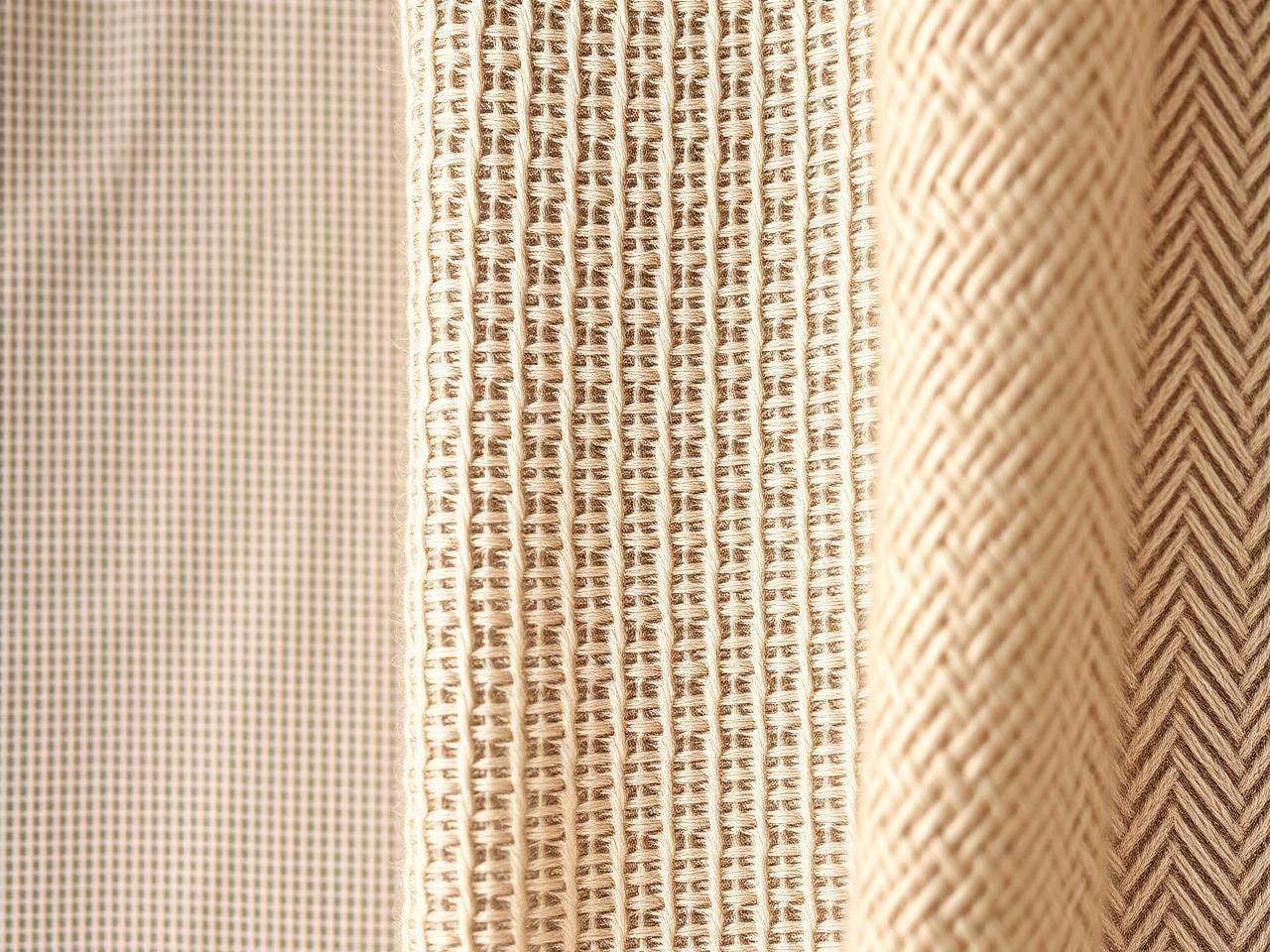
The classic over-one, under-one interlacing. Balanced, breathable, slightly crisp. This is the default for shirting, dresses, curtains and bedding. Most "washed linen" fabrics on the market are plain weave.
Twill weave
The weft floats over 2–3 warp yarns, creating a diagonal rib. Softer drape, more wrinkle-resistant, richer surface. Ideal for trousers, structured jackets, and jacquard-adjacent home textiles.
Herringbone
A broken-twill "V" pattern. Adds visual texture and heritage character. Excellent for jackets, waistcoats, cushions and heritage curtains.
Basket weave
Two or more warp/weft yarns treated as one, giving a checkerboard surface. Airy, slubby, casual — perfect for beach shirts, loose overshirts, cushion covers.
Jacquard & dobby
Small repeating woven patterns (stripes, diamonds, florals) integrated at the loom. Adds pattern without printing, so both sides look finished. Common in premium bedding, table linens and curtain accents.
Match the weight to the end use — quick reference
| End use | Recommended weight | Preferred weave |
|---|---|---|
| Summer blouse / scarf | 90–120 gsm | Plain |
| Everyday shirt / dress | 140–180 gsm | Plain or dobby |
| Wide-leg trouser / jumpsuit | 180–220 gsm | Plain or twill |
| Tailored blazer / structured trouser | 240–300 gsm | Twill or herringbone |
| Bed linen (sheets / duvet) | 160–200 gsm | Plain, stone-washed |
| Curtain (drape) | 200–260 gsm | Plain or basket |
| Curtain (blackout / heavy) | 280–380 gsm | Twill / jacquard |
| Cushion / upholstery | 300–450 gsm | Herringbone / basket |
| Apron / tote / workwear | 320–450 gsm | Plain or twill |
Three mistakes we see almost every week
- Speccing "100% linen" without a GSM. The mill will default to whatever it has in stock — usually 160 gsm — and your tailored trousers will end up as breezy as a summer shirt. Always write the target GSM (±10%) on your tech pack.
- Using shirt-weight linen for curtains. Under 180 gsm, linen curtains blow, wrinkle and fade quickly under direct sun. For window treatments, start at 200 gsm and add a cotton liner.
- Ignoring pre-shrink. Linen shrinks 4–8% on the first hot wash. Ask for stone-washed or garment-washed finishes when the piece is meant to look "lived-in" — and pre-wash all yardage before cutting.
How to spec linen fabric on your tech pack
A tight fabric brief has just six lines:
- Composition: e.g. 100% linen, or 55% linen / 45% cotton.
- Weight: target GSM ±10%.
- Weave: plain, twill, herringbone, basket, dobby, jacquard.
- Width: usable width in cm (140 / 150 / 280 for wide bedding linen).
- Finish: greige, softened, enzyme-washed, stone-washed, garment-dyed.
- Colour reference: Pantone TCX or a physical swatch.
Send those six lines with a mood board image, and any linen mill in the world can quote you within a day.
Sample before you commit
Even with the perfect spec, linen has personality — slub distribution, softness and drape vary from batch to batch. Always request a lab dip + hand feel swatch before placing production. At LinenTailor we ship free A5 swatches to designers worldwide from our Dongguan atelier, and match to any GSM and weave in this guide starting at 30 metres MOQ for fabric or 30 pieces per colour for finished apparel.
Request free linen swatches → · Try our AI fabric matcher · Talk to a production specialist