July 8, 2026 · 10 min read
How to Care for Linen Clothing: The Complete Wash, Dry, Iron & Storage Guide
A practical, sourcing-expert guide to washing, drying, ironing, de-wrinkling, stain-removing and storing 100% linen and linen blends — so your garments and home textiles soften beautifully and last 10+ years.
Key takeaways
- Wash linen at 30 °C on a gentle cycle with a mild detergent; never use fabric softener or bleach.
- Air-dry in the shade, or tumble on low and remove while slightly damp for the softest result.
- Iron on the linen setting while damp, or embrace the natural crumple — both are correct for linen.
- Store linen folded and breathable, never in plastic; hanging heavy linen stretches the shoulders.
- Pre-washed linen shrinks 3-5% once and then stabilises; over-drying, not washing, is what makes linen feel scratchy.
Linen is the longest-lived natural fibre in most people's wardrobes — a well-made linen shirt or bedsheet should still look better after 200 washes than it did on day one. But that only happens if it's cared for correctly. This guide walks through exactly how to wash, dry, iron, de-wrinkle, remove stains from, and store linen clothing and home textiles, based on the mill and laundry protocols we use at our own factory.
Why linen care is different from cotton
Linen fibres are hollow, roughly 2–3× stronger than cotton, and become softer with every wash rather than degrading. That strength is also why linen tolerates a wider range of temperatures than most fabrics — but the same hollow structure absorbs water quickly, which is where shrinkage, distortion, and hard creases come from if you get the first few washes wrong. For a deeper look at how pure linen differs from blends, see our pure linen vs. linen blends guide.
1. Before the first wash: read the label, then pre-wash
Most quality linen is pre-shrunk at the mill (stone-washed or enzyme-washed), but expect an additional 3–5% shrinkage on the first home wash for garment-washed items, and up to 7% for raw or "greige" linen. Always:
- Wash new linen separately the first time — pure linen and indigo-dyed linen in particular can release loose fibres and colour.
- Sort by colour and by weight (don't wash a heavy linen jacket with a lightweight shirt).
- Close buttons and zips, and turn dark or printed pieces inside-out to protect the surface.
2. How to machine-wash linen (the safe default)
Contrary to old advice, 100% linen and most linen blends are perfectly machine-washable. Use these settings:
- Temperature: 30 °C / 86 °F for coloured linen; up to 40 °C / 104 °F for whites and bedding.
- Cycle: gentle or "delicate", never more than 800 rpm spin.
- Load: fill the drum only ½ to ⅔ full — linen needs room to move so creases don't set.
- Detergent: a mild liquid detergent, ideally pH-neutral or specifically for delicates. Avoid powder detergents (they can lodge in the weave) and never use chlorine bleach on coloured linen — it weakens the fibre and yellows whites over time.
- Fabric softener: skip it. Softener coats the fibres and blocks linen's natural moisture-wicking. Linen softens naturally with each wash on its own.
- Mesh bag: use one for lightweight shirts, dresses, and anything with embroidery or buttons.
3. Hand-washing linen (for silk blends, wool blends, and heavy embroidery)
For linen-silk or linen-wool blends and pieces with heavy embroidery or hand-printing, hand-wash in lukewarm water (≤ 30 °C):
- Dissolve a capful of gentle detergent in the water before adding the garment.
- Submerge, swirl gently for 3–5 minutes, and let soak for up to 15 minutes.
- Rinse in clean cool water until no suds remain — twice if needed.
- Press (don't wring) the water out between two clean towels.
4. Drying linen without damage
Drying is where most linen goes wrong. The rules:
- Air-dry flat or on the line whenever possible — this is the single biggest factor in preserving shape and hand-feel.
- Dry in shade, not direct sun. Prolonged UV yellows whites and fades darks.
- Reshape while damp: smooth collars, cuffs, and seams with your hands before hanging.
- Hang on wide wooden or padded hangers — thin wire hangers leave shoulder points.
- If you must use a tumble dryer, run it on low heat and remove garments while still slightly damp. Over-drying is what causes the hard, brittle feel people mistakenly blame on linen itself.
5. Ironing and de-wrinkling
Linen wrinkles — this is part of its character, not a defect. If you want a crisp look:
- Iron while still damp, on the reverse side, using a hot iron with steam (linen setting, ~200–230 °C).
- Use a light misting of water for stubborn creases.
- Iron dark linen through a thin cotton pressing cloth to avoid shine marks.
Prefer the relaxed look? A garment steamer for 30 seconds softens creases without flattening the texture — ideal for our small-batch linen apparel and drapey pieces.
6. Removing common stains from linen
Act fast — linen absorbs liquid quickly but also releases it well if treated within an hour.
- Wine, coffee, tea: blot (don't rub) with cold water, then apply a paste of baking soda and water for 15 minutes before washing.
- Oil and grease: sprinkle with cornstarch or talcum powder, leave 20 minutes, brush off, then wash with a small amount of dish soap worked into the stain.
- Sweat and deodorant: pre-soak in a solution of 1 part white vinegar to 4 parts cool water for 30 minutes before machine washing.
- Ink: dab with rubbing alcohol on a cotton pad from the underside of the fabric, then wash normally.
- Blood: only ever use cold water — hot water sets protein stains permanently.
Avoid chlorine bleach entirely. For stubborn whites, use oxygen-based bleach (sodium percarbonate) at 40 °C.
7. Storing linen between seasons
- Always store clean and fully dry — invisible sweat or food residue attracts moths and yellows fibres.
- Fold heavy pieces (jackets, trousers, bedding) rather than hanging — long-term hanging distorts the weave under its own weight.
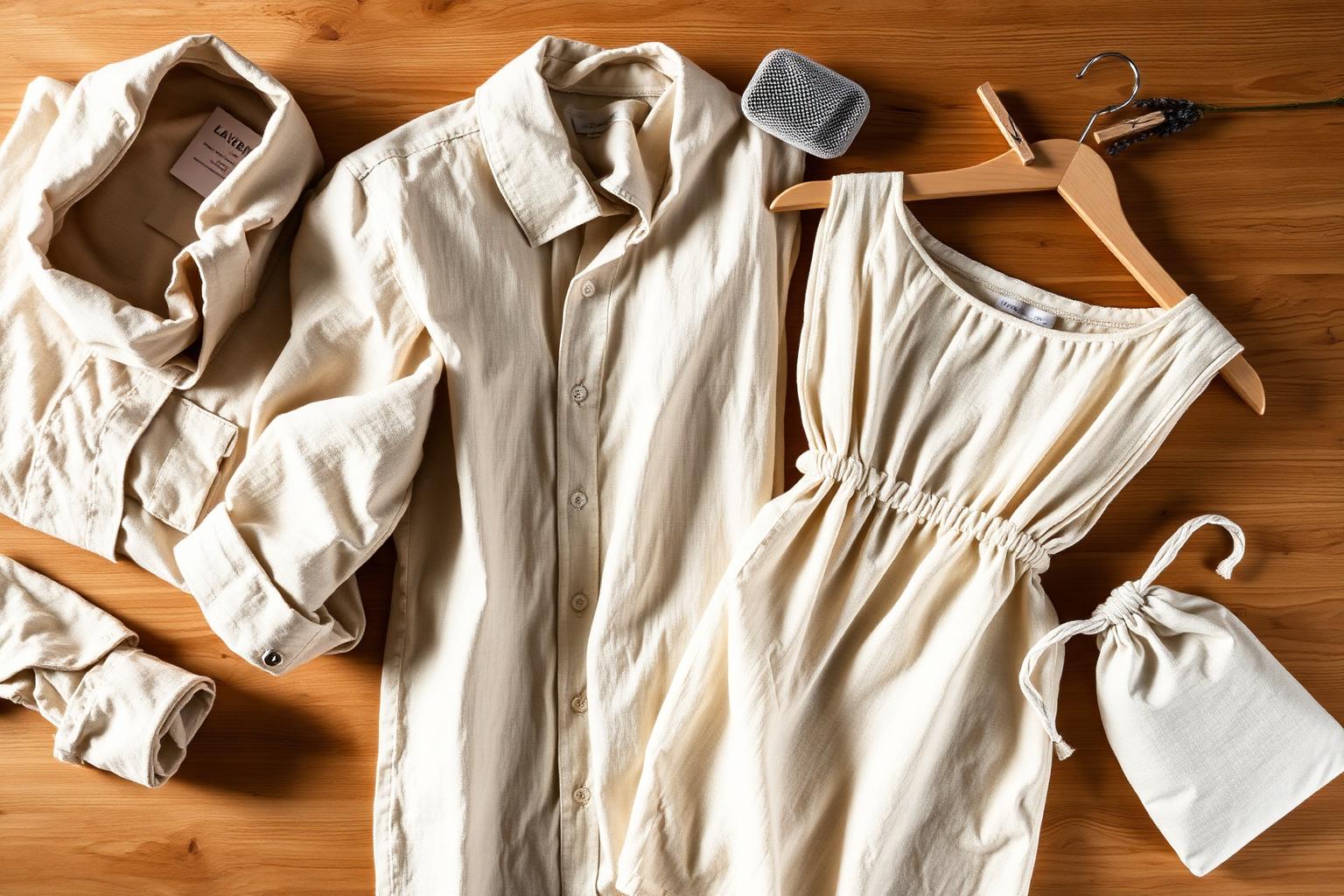
- Hang lightweight shirts and dresses on wide wooden hangers in breathable cotton garment bags — never plastic dry-cleaner bags, which trap moisture.
- Add a lavender or cedar sachet to deter moths naturally.
- Store in a cool, dark, dry place. Avoid attics and basements with humidity swings.
8. Caring for linen bedding and home textiles
The same rules apply to bedding, with a few additions specific to our linen bedding range:
- Wash sheets every 7–10 days at 40 °C on a gentle cycle.
- Rotate two sets of bedding so each set fully rests and dries between uses — this can double the effective lifespan.
- For duvet covers, close all buttons before washing to prevent tangling with other items.
- Iron pillowcases only if you prefer a crisp look — most linen bedding is designed to embrace its natural crumple.
9. Care differences by blend
- Linen-cotton: follow the linen rules above; more wrinkle-resistant, tolerates 40 °C.
- Linen-viscose: gentle cycle at 30 °C only, always inside a mesh bag; viscose loses strength when wet.
- Linen-tencel: as viscose, but tolerates slightly higher heat.
- Linen-silk: hand-wash or dry-clean only.
- Linen-wool: dry-clean or specialist wool programme with wool detergent; never tumble dry.
- Linen-hemp: the most robust blend — treat like pure linen; tolerates frequent washing.
10. Quick FAQ
Does linen shrink? Pre-washed linen shrinks 3–5% on the first home wash, then stabilises. Follow the temperature rules above and it will not shrink further.
Can I put linen in the dryer? Yes, on low heat, removed while still slightly damp. Air-drying is always better for longevity.
Why does my linen feel scratchy? Almost always over-drying, hard water, or fabric softener build-up. Skip the softener, dry sooner, and try a vinegar rinse (½ cup white vinegar in the rinse cycle) once a month.
How long should quality linen last? A well-cared-for 100% linen garment typically lasts 8–15 years of regular wear, and linen bedding often outlives its owners' cotton sheets by 3–4×.
Sourcing linen made to be cared for
The single biggest factor in easy care is the quality of the linen you start with — properly retted flax, cleanly spun yarn, and honest mill finishing. LinenTailor operates a cut-and-sew workshop in Dongguan, with fabrics sourced from trusted linen mills. OEKO-TEX Standard 100 certified linen and organic cotton certified fabrics are available on request. Explore our fabric library, small-batch apparel program (MOQ 30), or custom manufacturing options — or get a quote via WhatsApp to talk sourcing.