
August 21, 2026 · 9 min read
Linen GSM Chart: Which Linen Weight to Choose for Shirts, Dresses, Trousers, Bedding & Curtains
A practical linen GSM chart for designers and buyers: what each weight range feels like, which product it suits, how GSM affects opacity, drape, shrinkage and price, and the exact weight to write on your tech pack.
Key takeaways
- GSM (grams per square metre) is the single most useful number on a linen spec — it predicts opacity, drape, durability and price better than any other figure.
- Shirts and blouses: 120–160 GSM. Dresses: 140–190 GSM. Trousers and jackets: 190–260 GSM. Bedding: 160–200 GSM. Curtains and upholstery: 240–400 GSM.
- Below 120 GSM linen is semi-sheer and usually needs lining; above 300 GSM it is too stiff for most garments but ideal for interiors.
- Heavier does not mean better quality: yarn count, weave and finishing matter as much as weight.
- Always confirm GSM after finishing — enzyme and stone washing can drop 5–10% of the weight from the greige figure.
- LinenTailor stocks 100+ linen qualities from 90 to 400 GSM, produces apparel from 30 pieces per colour, home textiles from 1 piece, and ships free swatches worldwide.
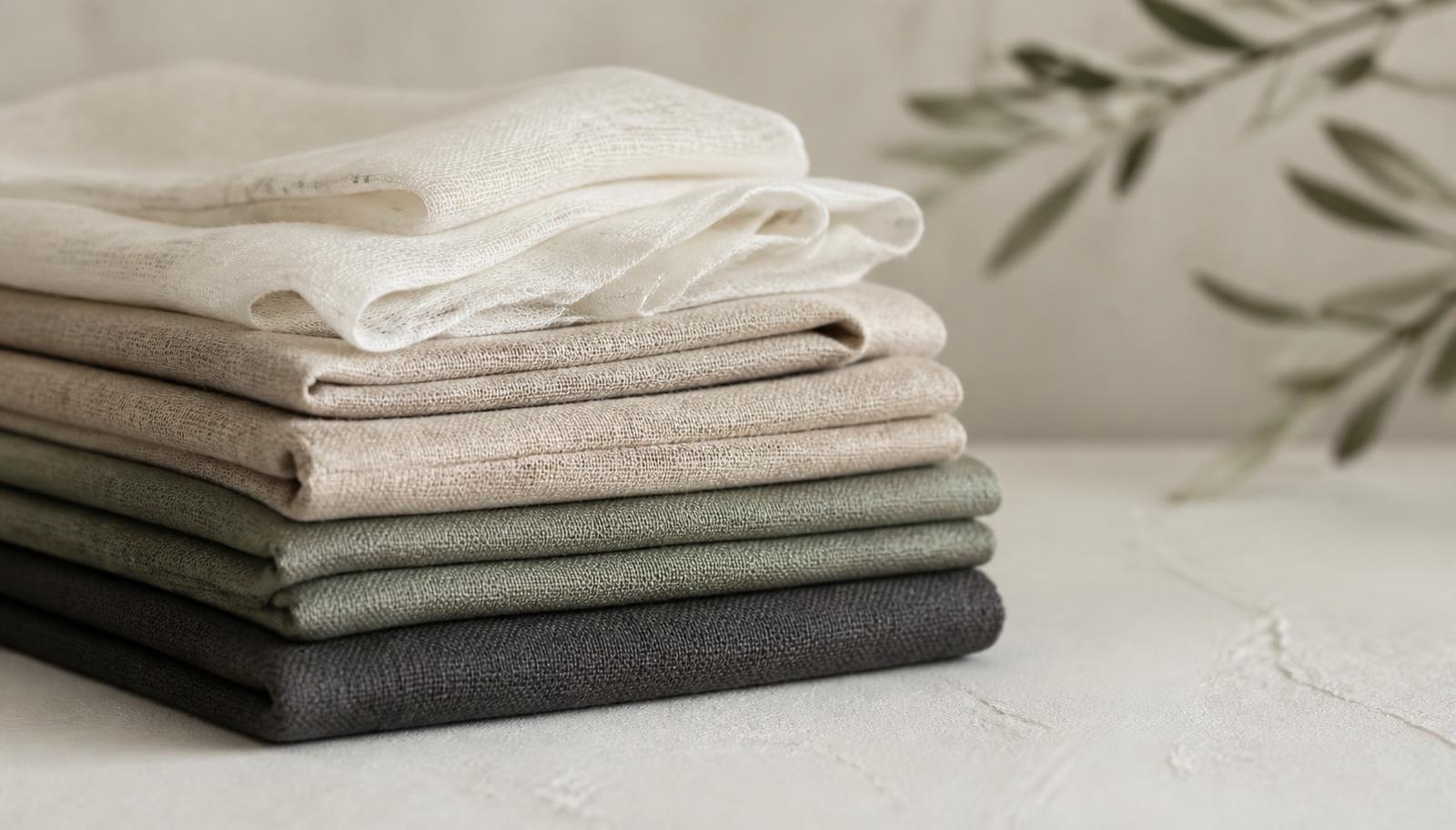
If you only take one number from a fabric spec sheet, take GSM. Grams per square metre tells you more about how a linen will behave — how sheer it is, how it drapes, how it wears, and roughly what it costs — than fibre origin or thread count ever will. This chart is the one we use internally when quoting small-batch apparel and custom home textiles, and it pairs with our deeper guide to linen weights and weaves.
The linen GSM chart
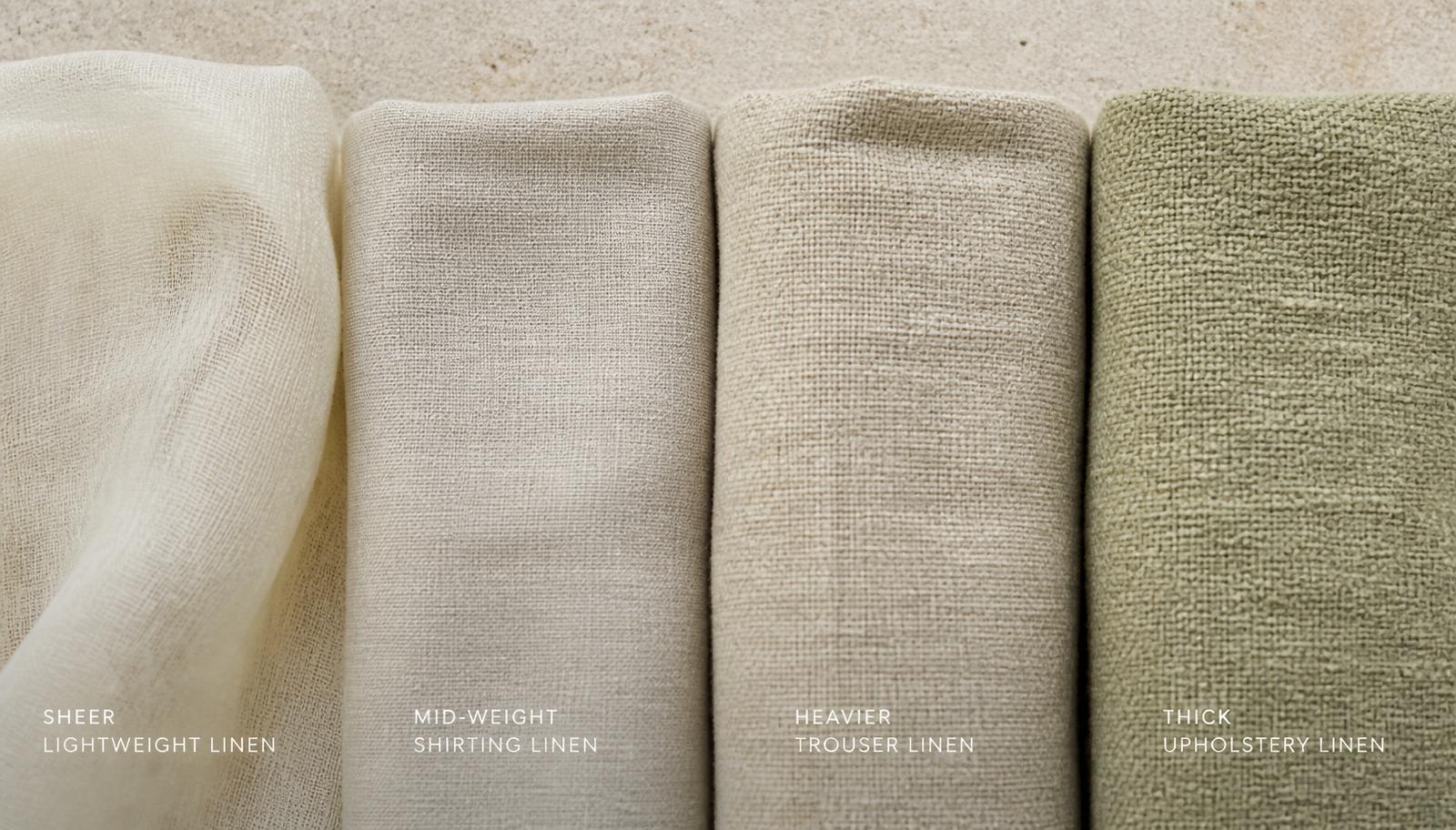
| GSM | Feel | Opacity | Best for |
|---|---|---|---|
| 90–120 | Sheer, airy, fluid | Semi-sheer | Scarves, overlays, sheer curtains, lined blouses, handkerchief linen |
| 120–160 | Light with a soft hand | Mostly opaque | Shirts, blouses, kidswear, pillowcases, napkins |
| 160–190 | Balanced body and drape | Opaque | Dresses, skirts, co-ord sets, duvet covers, flat sheets |
| 190–260 | Firm, structured | Fully opaque | Trousers, shorts, overshirts, unstructured jackets, tablecloths |
| 260–340 | Heavy, canvas-like | Fully opaque | Curtains, cushion covers, aprons, tote bags, light upholstery |
| 340–400+ | Rigid, upholstery grade | Fully opaque | Upholstery, heavy drapery, structured interiors |
Choosing GSM by product
- Shirts and blouses — 120–160 GSM. 140 GSM is the safest all-season shirting. Go to 120 GSM for hot-climate markets, 160 GSM if you want a collar and placket to hold shape without heavy interlining.
- Dresses — 140–190 GSM. Tiered and shirred silhouettes work best around 140–160 GSM; A-line and structured shapes hold better at 170–190 GSM.
- Trousers and shorts — 190–260 GSM. Below 190 GSM linen trousers bag at the knee and seat within a season.
- Jackets and overshirts — 220–280 GSM, ideally in twill or basket weave for stability.
- Bedding — 160–200 GSM, stonewashed. This is the range almost every premium linen bedding brand uses.
- Curtains — 240–320 GSM. Weight is what makes a curtain hang straight; lighter cloth needs a weighted hem.
- Table linen — 180–240 GSM, where absorbency and launderability matter more than drape.
What GSM does not tell you
Two fabrics at 180 GSM can feel completely different. Check these alongside the weight:
- Yarn count and quality. Long-line European flax gives a cleaner, stronger yarn than tow flax at the same weight.
- Weave. Plain weave feels crisp, twill drapes softer, basket weave feels textured and airy at an identical GSM.
- Finishing. Enzyme wash, stonewash and garment dye all soften the hand and reduce measured weight by roughly 5–10%.
- Shrinkage. Untreated linen can shrink 4–8% on the first hot wash. Pre-shrunk goods, or a pattern allowance, are non-negotiable for bulk.
- Width. GSM is weight per square metre, not per linear metre — a 150 cm wide fabric costs more per running metre than a 135 cm one at the same GSM.
How GSM affects your cost
Linen is priced largely by weight, so a 260 GSM trouser cloth typically costs 50–80% more per metre than a 140 GSM shirting of the same quality. Heavier fabric also consumes more shipping weight and slows sewing. If a style works at two weights, the lighter one is almost always the more commercial choice — provided it passes an opacity and seam-strength check on the sample.
Writing GSM on your tech pack
Specify it as a finished, washed target with a tolerance, for example: "100% linen, plain weave, 180 GSM ±5% after enzyme wash, 145 cm usable width, pre-shrunk, OEKO-TEX Standard 100." That single line prevents most fabric disputes between a brand and a factory.
Get the right weight in your hands
LinenTailor — the brand of Dongguan Jianmai Supply Chain Co., Ltd. — stocks 100+ linen and linen-blend qualities from 90 to 400 GSM in our cut-and-sew workshop in Dongguan, China. Order fabric by the metre or by the roll, produce custom apparel from 30 pieces per colour, or home textiles from a single piece. Free swatch cards ship worldwide.
Not sure which weight your style needs? Upload a photo to AI Fabric Match for a GSM, weave and finishing recommendation, or message us on WhatsApp for a quote within 24 hours.
Frequently asked questions
- What is a good GSM for linen clothing?
- For most linen clothing, 140–200 GSM is the sweet spot. Use 120–160 GSM for shirts and blouses, 140–190 GSM for dresses and skirts, and 190–260 GSM for trousers, shorts and unstructured jackets.
- Is higher GSM linen better quality?
- No. GSM only describes weight per square metre. A 150 GSM shirting woven from fine long-line flax yarn can be far higher quality than a coarse 250 GSM fabric. Judge quality by yarn evenness, slub character, weave density and finishing, and judge suitability by GSM.
- What GSM linen is best for bedding?
- 160–200 GSM is the standard for linen duvet covers and flat sheets, with pillowcases often slightly lighter at 150–180 GSM. Below 150 GSM bedding feels thin and wears faster; above 220 GSM it feels heavy and takes longer to dry.
- Is 100 GSM linen see-through?
- Yes, 90–120 GSM linen is semi-sheer in light colours and is usually used for overlays, sheer curtains, scarves or lined garments. If you need opacity at a light weight, choose a darker shade, a denser plain weave, or add a lining.
- Does GSM change after washing?
- Yes. Finishing and garment washing typically remove 5–10% of greige weight, while shrinkage can make the finished fabric feel denser. Always approve the GSM on a finished, washed sample rather than on greige goods.
- What is the minimum order for a specific linen weight?
- At LinenTailor you can buy stocked linen by the metre or by the full roll (usually 50–60 m). Custom apparel production starts at 30 pieces per colour and custom home textiles start at 1 piece, so you do not need a 300 m mill minimum to access a specific weight.