August 15, 2026 · 10 min read
What Is Cotton-Linen Fabric Used For? (Apparel, Home & Beyond)
A practical guide to cotton-linen fabric uses: which garments, bedding, curtains and table linen suit each weight, the GSM ranges to specify, and where cotton-linen outperforms pure linen or pure cotton.
Key takeaways
- Cotton-linen (typically 55% linen / 45% cotton, or 70/30) blends linen's breathability and dry hand with cotton's softness, lower price and reduced creasing.
- Weight decides the use: 110–150 GSM for shirts and dresses, 160–220 GSM for trousers, jackets and bedding, 240 GSM and above for curtains, upholstery and heavy table linen.
- In apparel it is most used for summer shirts, dresses, wide-leg trousers, co-ord sets, kidswear and unstructured jackets.
- In home textiles it is most used for duvet covers and sheets, pillowcases, curtains, tablecloths and napkins, cushion covers and tea towels.
- Choose cotton-linen over 100% linen when you want less wrinkling, softer first-wash hand feel and a lower unit cost; choose 100% linen for maximum coolness and patina.
- Always pre-shrink or garment-wash cotton-linen: untreated blends can shrink 3–7% on the first wash.
Cotton-linen is the most-requested fabric in our library, and the reason is simple: it does most of what pure linen does, at a lower price and with fewer complaints about creasing. But "cotton-linen" is not one fabric — it is a family that runs from 100 GSM voile to 300 GSM upholstery cloth, and each weight has its own job. This guide sets out exactly what cotton-linen fabric is used for, which weight to specify for each product, and when to choose it over pure linen or pure cotton.
Quick answer
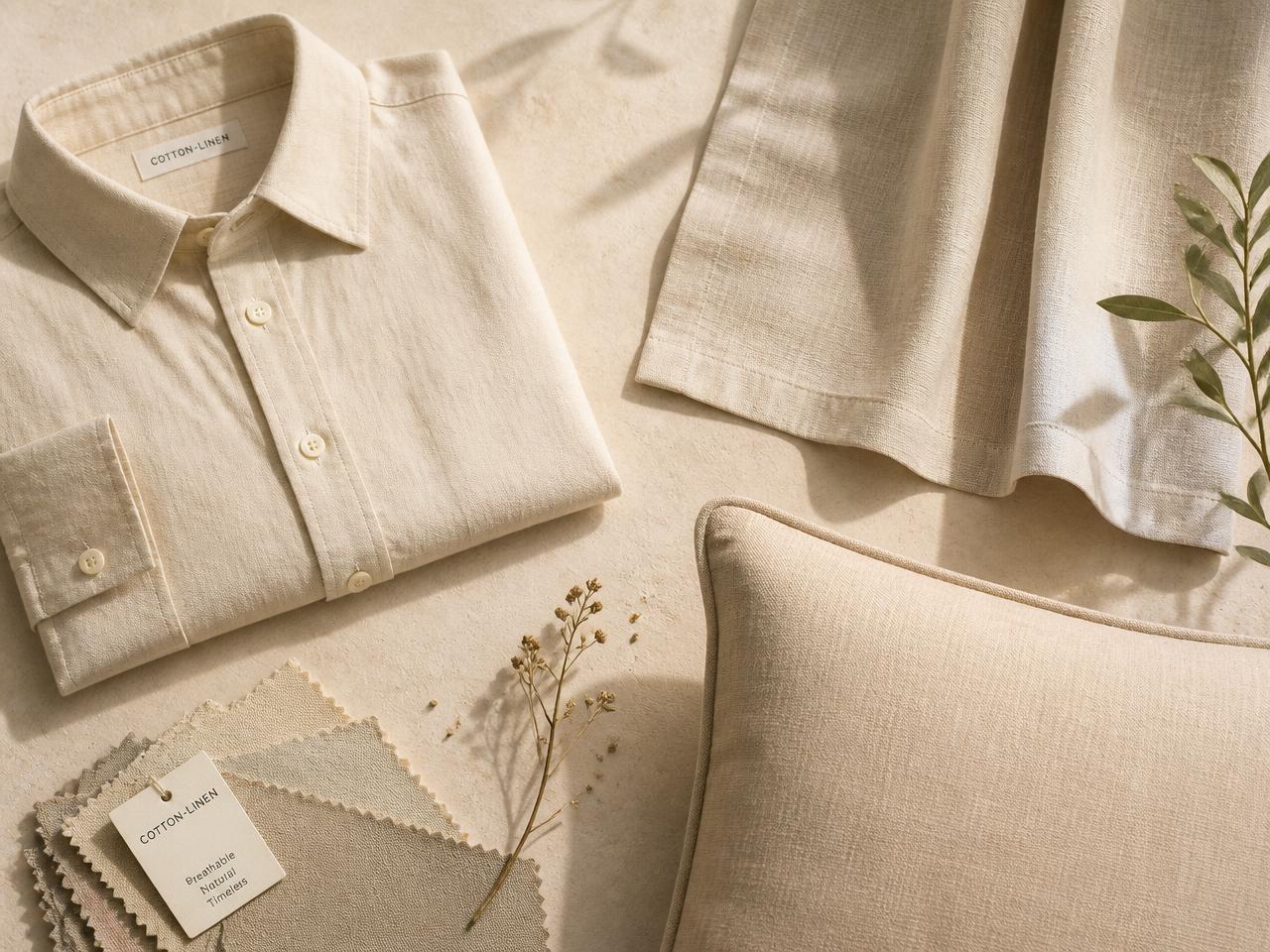
Cotton-linen fabric is used mainly for warm-weather clothing (shirts, dresses, trousers, co-ord sets, kidswear, unstructured jackets) and for home textiles (bedding, curtains, table linen, cushion covers, tea towels). Lighter weights of 110–150 GSM go into garments; 160–220 GSM into trousers, jackets and bedding; 240 GSM and above into curtains, upholstery and heavy table linen.
What cotton-linen actually is
Cotton-linen is a woven blend of flax and cotton fibres. The two most common commercial ratios are 55% linen / 45% cotton and 70% linen / 30% cotton; lighter shirtings sometimes run 45/55 in cotton's favour. Flax contributes breathability, a dry crisp hand, strength when wet and that characteristic slubby surface. Cotton contributes softness, dye uniformity, easier sewing and a meaningfully lower cost per metre.
The practical result is a fabric that is cooler than cotton, softer than pure linen from the first wash, and noticeably less prone to the deep creasing that makes some customers avoid linen entirely.
Cotton-linen uses by weight
| Weight (GSM) | Hand / drape | Best used for |
|---|---|---|
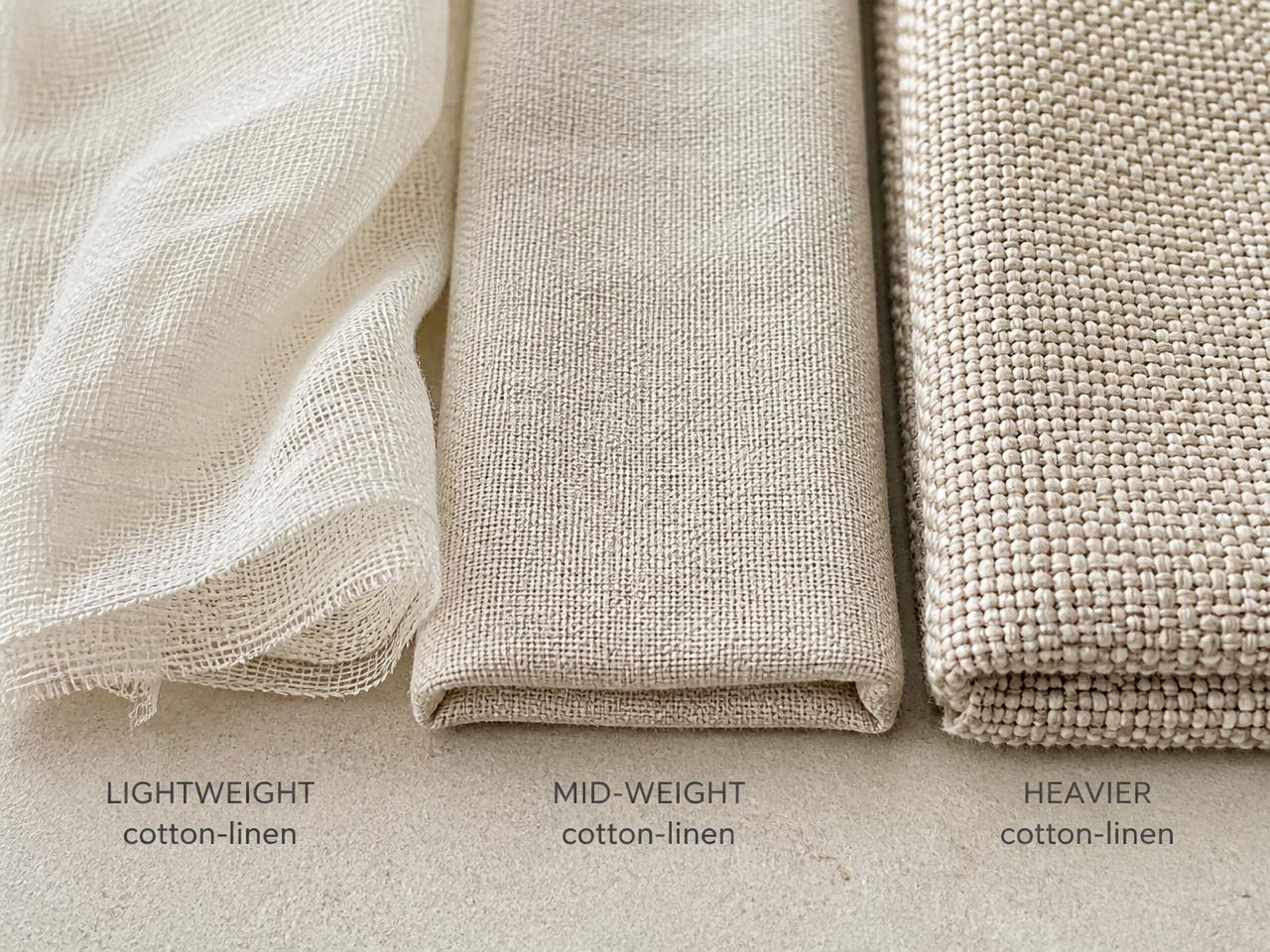
| 90–110 | Sheer, fluid | Scarves, overlays, sheer curtains, lined blouses |
| 110–150 | Soft, light, semi-opaque | Shirts, blouses, summer dresses, kidswear, pillowcases |
| 160–220 | Firm with body | Trousers, shorts, co-ord sets, shirt jackets, duvet covers, sheets, tablecloths |
| 240–300 | Heavy, structured | Curtains, cushion covers, aprons, tote bags, light upholstery, heavy table linen |
1. Apparel uses
- Shirts and blouses (120–150 GSM): the single largest use. Cotton-linen holds a collar better than 100% linen at the same weight and presses more easily.
- Summer dresses (130–170 GSM): tiered, shirred and A-line silhouettes all work; add a soft enzyme wash for a lived-in drape.
- Wide-leg trousers and shorts (180–220 GSM): enough body to hold the leg line without bagging at the knee.
- Co-ord sets and resortwear (150–190 GSM): the category where cotton-linen has largely replaced pure linen commercially, because it survives travel and packing better.
- Kidswear (110–140 GSM): soft, breathable and machine-washable; pair with a pre-shrunk finish.
- Unstructured jackets and overshirts (220–260 GSM): often in a basket or twill weave for extra stability.
2. Home textile uses
- Duvet covers and flat sheets (160–200 GSM): stonewashed cotton-linen bedding is the fastest-growing category we produce, because it is cooler than cotton percale and softer than pure linen at the same price point.
- Pillowcases (140–180 GSM): lighter than the duvet cover so the case stays soft against the skin.
- Curtains (200–280 GSM): good weight retention and a natural fall; heavier weaves reduce light transmission without blackout lining.
- Tablecloths and napkins (180–240 GSM): absorbent, launders well, and improves with each wash.
- Cushion covers (240–300 GSM): textured basket weaves hold their shape on a filled insert.
- Tea towels and kitchen linen (200–240 GSM): flax's high wet strength and absorbency are the functional reason this category still uses linen blends.
3. Accessories and other uses
Beyond clothing and bedding, cotton-linen is used for tote bags and pouches, aprons, packaging and dust bags, book covers, lampshades, light slipcovers and craft or quilting yardage. Heavier canvas-style blends in 280–340 GSM are also used for light upholstery and bench seating where a natural texture is wanted.
Cotton-linen vs pure linen vs pure cotton
| Cotton-linen | 100% linen | 100% cotton | |
|---|---|---|---|
| Breathability | High | Highest | Medium |
| Softness off the roll | High | Medium | High |
| Creasing | Moderate | High | Moderate |
| Cost per metre | Lower | Higher | Lowest |
| Ages into a patina | Yes, gradually | Yes, strongly | Limited |
| Best for | Commercial ranges, bedding, travel-friendly clothing | Premium linen positioning, hot climates | Basics, printed goods |
For a deeper comparison see our guides to pure linen vs linen blends and natural fabric fibres.
Production notes before you order
- Confirm shrinkage. Untreated cotton-linen shrinks roughly 3–7% on the first hot wash. Ask for a wash-test result, or specify pre-shrunk / garment-washed goods.
- Specify the finish. Enzyme wash for softness, stonewash for a relaxed bedding hand, calendered for a crisper shirting.
- Watch dye behaviour. Flax and cotton take dye at different rates; deep shades can show a subtle two-tone character. On piece-dyed goods, approve a lab dip.
- Mind the fabric minimum. Many mills will not weave under 300 metres. Working from a stocked fabric library — as we do with 100+ linen and cotton-linen qualities — removes that barrier for small runs.
Ordering cotton-linen with LinenTailor
LinenTailor is the brand of Dongguan Jianmai Supply Chain Co., Ltd., a small-batch linen production partner in Dongguan, China. We sell cotton-linen fabric by the metre or by the roll, produce custom apparel from 30 pieces per colour and custom home textiles from 1 piece. OEKO-TEX Standard 100 certified fabrics are available and free swatch cards ship worldwide.
Not sure which weight your style needs? Upload a photo to AI Fabric Match and we will recommend GSM, weave and finishing — or message us on WhatsApp for a quote within 24 hours.
Frequently asked questions
- What is cotton-linen fabric used for?
- Cotton-linen is used for summer shirts and dresses, wide-leg trousers, co-ord sets, kidswear and light jackets in apparel; and for duvet covers, sheets, pillowcases, curtains, tablecloths, napkins, cushion covers and tea towels in home textiles. Heavier constructions are also used for tote bags, aprons and light upholstery.
- What GSM of cotton-linen should I use for a shirt or dress?
- 110–150 GSM is the standard range for shirts, blouses and summer dresses. Below 110 GSM the fabric usually needs lining; above 160 GSM it starts to feel structured and is better suited to trousers or jackets.
- Is cotton-linen better than 100% linen?
- Neither is better in absolute terms. Cotton-linen wrinkles less, feels softer straight off the roll and costs less per metre; 100% linen is cooler, more absorbent and develops a better patina over years of washing. For a first collection or a price-sensitive range, cotton-linen is usually the safer commercial choice.
- Does cotton-linen shrink?
- Yes. Untreated cotton-linen typically shrinks 3–7% on the first hot wash. Specify a pre-shrunk or garment-washed finish, or add shrinkage allowance to the pattern, and always confirm the shrinkage test result before bulk cutting.
- What is the minimum order for custom cotton-linen products?
- At LinenTailor, custom apparel starts at 30 pieces per colour and custom home textiles start at 1 piece. Cotton-linen fabric itself is sold by the metre or by the full roll (typically 50–60 m) with roll discounts.