July 30, 2026 · 11 min read
Natural Fabric Fibres Explained: Cotton, Linen, Tencel, Hemp & Ramie
A plain-English guide to natural fabric fibres — cotton, linen (flax), Tencel lyocell, hemp, ramie, silk and wool. How each is made, how it feels, how it wears, and which one to choose for apparel or home textiles.
Key takeaways
- Linen (flax) is the strongest common natural fibre and gets softer with every wash; cotton is softer on day one but wears out faster.
- Tencel lyocell drapes like viscose but is made in a closed-loop solvent process, so it is the most fluid of the sustainable options.
- Hemp and ramie behave like heavier, more robust linens and suit workwear, bags and upholstery.
- For breathability in hot, humid climates, pure linen and linen-hemp blends outperform cotton and all synthetics.
- Blends are a trade-off, not a compromise: linen-cotton reduces wrinkling, linen-viscose adds drape, linen-Tencel adds sheen and softness.
"Natural fabric" is one of the most used — and least explained — phrases in fashion. Cotton, linen, Tencel, hemp, ramie, silk and wool all sit under that label, yet they come from completely different plants, animals and processes, and they behave nothing alike on the body. This guide explains each fibre in plain language: where it comes from, how it feels, how it wears and washes, what it costs, and when we recommend it inside our own linen and natural fabric library.
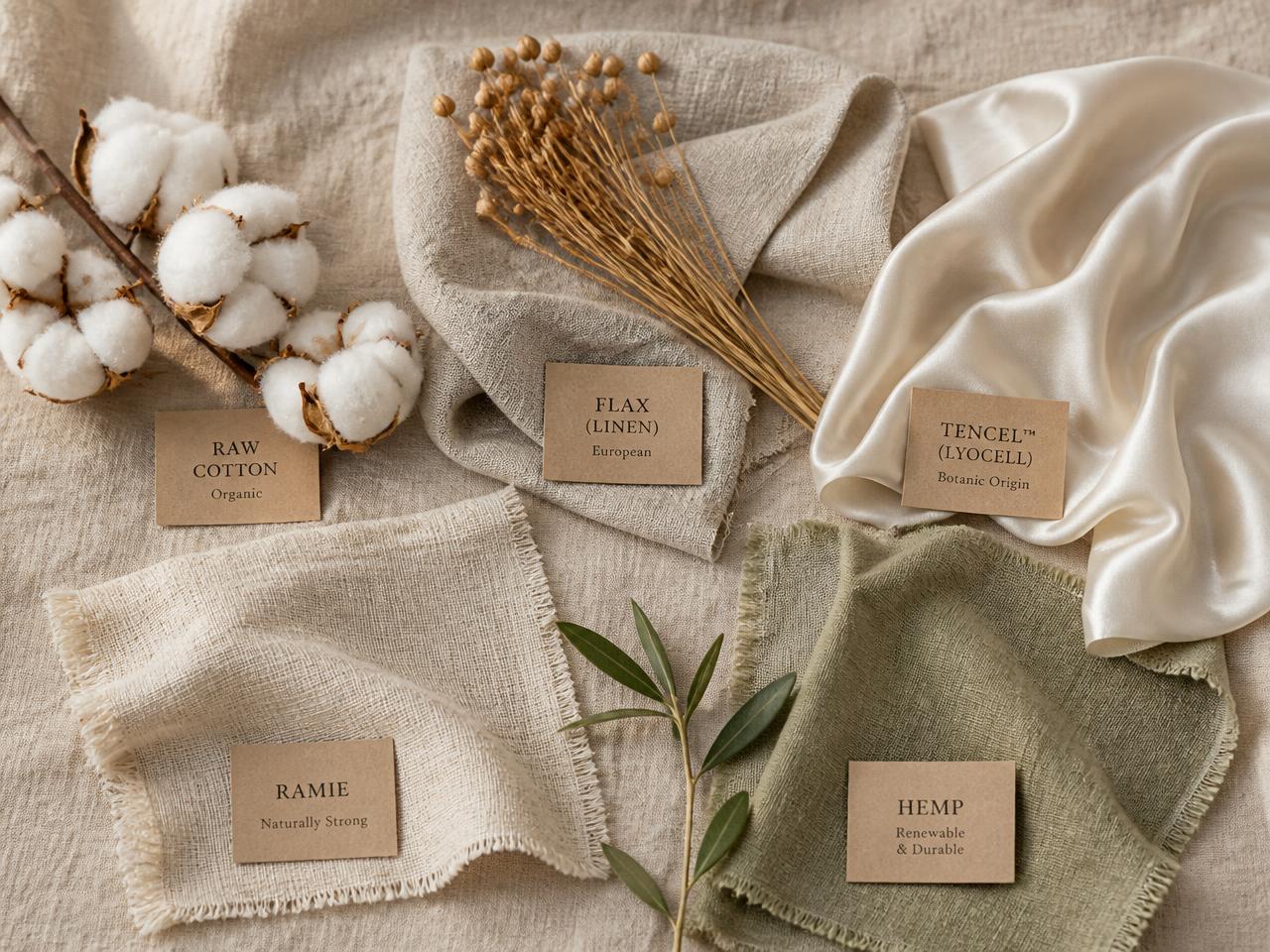
Quick answer: which natural fibre should you choose?
- Cotton — softest to the touch, easiest to sew and wash, best all-rounder for t-shirts, shirting and everyday bedding.
- Linen (flax) — the most breathable and the coolest in heat; crisp with a beautiful lived-in wrinkle. Best for summer clothing, curtains and premium bedding.
- Tencel lyocell — botanic cellulose with a silky, fluid drape and low wrinkle. Best for dresses, linings and blended linen knits.
- Hemp — the toughest plant fibre; rugged, low-input and gets softer with every wash. Best for workwear, bags, aprons and heavy home textiles.
- Ramie — linen-like with a bright lustre and high strength; usually blended with cotton or linen.
- Silk & wool — protein (animal) fibres, warm or luxurious, priced accordingly.
1. Cotton — the everyday standard
Origin: the seed hair of the cotton plant (Gossypium). Fibre type: cellulose, seed fibre.
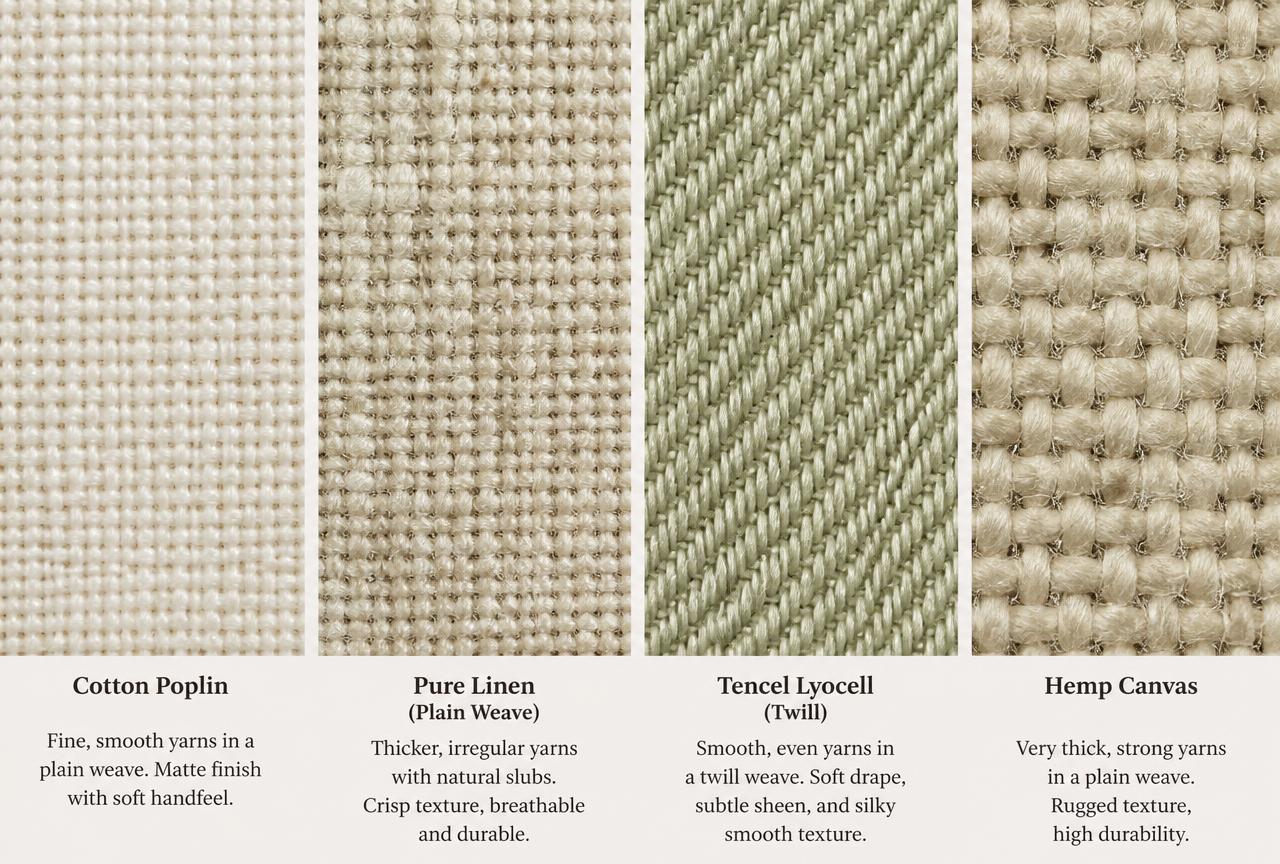
Cotton dominates natural textiles for one reason: it is easy. It is soft straight off the roll, takes dye beautifully, sews without drama and survives domestic laundering. Staple length is what separates cheap cotton from good cotton — long-staple varieties (Supima, Egyptian Giza) produce smoother, stronger and less pilling yarn.
- Hand feel: soft, matte, warm to the touch.
- Breathability: good, but holds moisture — it stays damp against the skin longer than linen.
- Durability: moderate; weakens with repeated hot washing.
- Care: machine wash 30–40 °C, tumble dry low, shrinks 3–5% unless pre-shrunk.
- Watch out for: conventional cotton is water- and pesticide-intensive; GOTS-certified organic cotton is the credible alternative.
2. Linen (flax) — the coolest fibre in hot weather
Origin: the stem (bast) of the flax plant (Linum usitatissimum). Fibre type: cellulose, bast fibre.
Flax stalks are retted (soaked so the woody core loosens), scutched and combed before spinning. The result is a long, hollow, highly conductive fibre that moves heat and moisture away from the skin faster than cotton — which is exactly why linen feels cool in humid summers.
- Hand feel: crisp and dry when new; becomes buttery-soft after 10–20 washes.
- Breathability: the best of any common natural fibre; absorbs up to 20% of its weight in moisture and releases it quickly.
- Durability: 2–3× stronger than cotton, and stronger again when wet — linen bedding routinely lasts decades.
- Care: cool machine wash, line dry, iron damp. Full detail in our linen care guide.
- Watch out for: it wrinkles — that is the aesthetic, not a defect. Enzyme or stone washing softens the crease.
If you are speccing linen for production, weight matters more than anything else; see our GSM and weave guide.
3. Tencel™ lyocell — botanic, silky and low-impact
Origin: wood pulp (mostly FSC-certified eucalyptus, beech or spruce) regenerated into fibre. Fibre type: regenerated cellulose.
Tencel is not "synthetic" in the petroleum sense and not strictly "natural" either — it is a plant-derived fibre made in a closed-loop solvent process that recovers more than 99% of the solvent and water. Practically, it gives you the drape of silk with the comfort of cotton.
- Hand feel: cool, smooth, fluid, with a subtle sheen.
- Breathability: excellent moisture management — it wicks better than cotton, which is why it is common in activewear blends.
- Durability: strong wet and dry, but prone to surface fibrillation if washed aggressively.
- Care: gentle wash 30 °C, low heat drying; avoid heavy fabric softeners.
- Best use: dresses, wide-leg trousers, linings, and linen–Tencel knit blends where you want linen texture with soft drape.
4. Hemp — the toughest plant fibre
Origin: the stem of Cannabis sativa (industrial, non-psychoactive). Fibre type: cellulose, bast fibre.
Hemp grows fast, needs little irrigation and almost no pesticide, and yields more fibre per hectare than cotton. Historically it was coarse; modern degumming and softening have made hemp shirting genuinely wearable.
- Hand feel: dry and firm when new, softening substantially over time.
- Durability: the strongest of the common natural fibres; naturally resistant to mould and UV.
- Care: machine wash warm, air dry; extremely wash-stable.
- Best use: aprons, tote bags, workwear, upholstery, heavy curtains; hemp–cotton blends for shirting.
5. Ramie — linen's bright cousin
Origin: the stem of the ramie nettle (Boehmeria nivea). Fibre type: cellulose, bast fibre.
- Hand feel: crisp with a distinct lustre, slightly stiffer than linen.
- Strengths: very high tensile strength, excellent shape retention, resists bacteria and mildew.
- Limits: brittle and low in elasticity, so it is almost always blended with cotton or linen (55/45 ramie–cotton is common).
- Best use: summer shirting and structured dresses where you want linen's look at a lower cost.
6. Silk and wool — the protein fibres
Silk is a continuous filament spun by the silkworm; wool is the fleece of sheep (or the hair of goats and camelids). Both are protein fibres, which means they are pH-sensitive, prefer cool gentle washing and neutral detergent, and can be damaged by chlorine bleach.
- Silk: unmatched lustre and drape, temperature-regulating, but weak in sunlight and expensive. Use for linings, evening wear, and linen–silk blends where you want a soft glow.
- Wool: warm even when damp, naturally elastic and odour-resistant. Merino for next-to-skin knitwear; heavier wools for tailoring and linen–wool suiting.
Side-by-side comparison
- Coolest in heat: linen > ramie > hemp > Tencel > cotton.
- Softest as-new: Tencel > cotton > wool > linen > hemp.
- Most durable: hemp > linen > ramie > cotton > Tencel.
- Best drape: Tencel > silk > lightweight linen > cotton.
- Lowest water and chemical input: hemp and flax > Tencel > organic cotton > conventional cotton.
- Wrinkles most: linen and ramie; least: Tencel and wool.
For the environmental question specifically, we wrote an honest comparison of linen vs cotton sustainability.
Why blends exist
Blending is not a way to cheapen fabric — it is how you engineer a specific behaviour. A few blends we use constantly:
- Linen–cotton 55/45: linen texture with cotton softness and fewer creases. The safest first linen for a new brand.
- Linen–Tencel 70/30: keeps linen's breathability, adds fluid drape for dresses and wide-leg trousers.
- Linen–viscose: the most fluid and the cheapest, at the cost of some durability.
- Ramie–cotton: crisp summer shirting at accessible cost.
- Hemp–organic cotton: rugged but wearable; excellent for utility styles and home textiles.
Our full breakdown lives in the pure linen vs blends guide.
How to read a fabric label like a buyer
- Composition — e.g. "55% linen / 45% cotton". Highest percentage governs the hand feel.
- Weight (GSM) — grams per square metre; predicts drape and opacity.
- Weave — plain, twill, herringbone, jacquard or knit.
- Finish — enzyme washed, stone washed, garment dyed, calendered.
- Certification — OEKO-TEX Standard 100 (chemical safety), GOTS (organic), European Flax® (flax origin), FSC (wood pulp for Tencel).
Those five lines are all a mill needs to quote you accurately.
Sourcing natural fabrics for a small brand
Natural fibres vary batch to batch — that is the trade-off for their character. Three things protect you:
- Order swatches before bulk. Hand feel cannot be judged from a screen.
- Pre-wash a test cut to measure shrinkage before you grade your pattern.
- Lock the lot. Reserve fabric from a single dye lot for the whole run to avoid shade variation.
At LinenTailor we hold our own linen and linen-blend stock in Dongguan, offer fabric from 1 roll, home textiles from 1 piece and custom apparel from 30 pieces per colour. Not sure which fibre suits your design? Upload a style photo to our AI Fabric Match tool and we will shortlist fabrics from the library, or message us on WhatsApp for a same-day recommendation.