LinenTailor · Sample development
How to avoid failed linen samples with a China small-batch manufacturer
New brands can avoid failed linen samples by agreeing on the fabric, fit and construction before sewing, then approving the final pre-production sample before bulk. Use this China apparel factory sample checklist to decide what is ready—and what still needs clarification.
Get a Quote via WhatsAppWho this checklist is for
Independent designers and boutique brands starting development with a China small-batch linen factory. Use it to review your brief and sample approvals; read the full Journal guide to avoiding failed samples for the detailed development process.
What a “failed sample” usually means
- Fit: measurements, ease or proportions do not match the agreed brief.
- Handfeel: fabric drape, texture or finish differs from the approved reference.
- Construction: seams, hems or internal details are interpreted differently.
- Trims and colour: buttons, labels, fastening or shade were never clearly approved.
- Size set: the base size fits, but grading across the intended sizes remains unchecked.
Before you request a sample
- Provide a usable tech pack or equivalent written brief with measurements and measurement methods.
- Add construction notes, fabric and trim specifications, colour references and annotated reference photos.
- Specify the fit sample size, intended size set and the details that are still open.
- Lock fabric and intended finish before the fit sample; do not approve fit in a substitute fabric without reviewing the change.
- Keep revisions in a consolidated written record and confirm what the next sample must resolve.
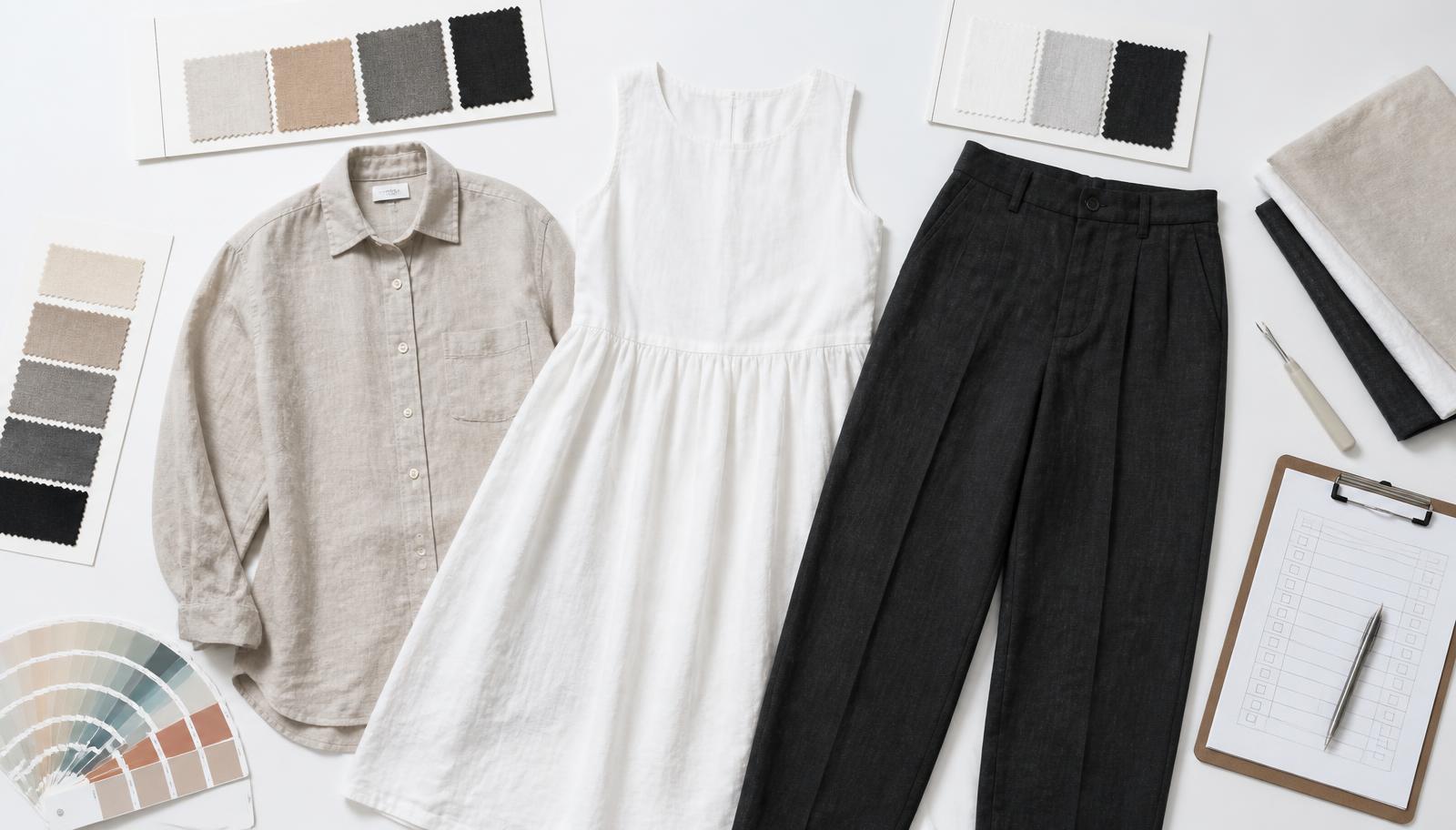
Fit sample, salesman sample, PPS: different approvals
- Fit sample
- Review measurements, ease, movement and proportions. Record corrections before moving to the next approval.
- Salesman sample
- Review the presentation of the style for buyers or a collection. A presentation sample is not a substitute for production approval.
- Pre-production sample (PPS)
- Confirm final fabric, trims, colour, construction, finish and agreed size requirements. Do not start bulk without an approved PPS; retain it as the production reference.
For process, costs and timing, use the existing linen apparel sampling process and costs guide.
How LinenTailor fits your development plan
- Apparel MOQ: 30 pieces per colour, with free size mixing within that colour.
- Quotes: human-reviewed within 24 hours after usable inputs such as a sketch, tech pack or reference photo.
- Location: LinenTailor / Dongguan Jianmai Supply Chain Co., Ltd., with a cut-and-sew workshop in Dongguan, China, with fabrics sourced from trusted linen mills.
- Sample-fee credit: At LinenTailor, the sample fee is refunded as a credit once your bulk orders for that style reach 150 pieces in total. Orders must accumulate for the same style; quantities across different styles are not combined.
Related guides and production options
Frequently asked questions
- Why do first linen samples fail with a new China factory?
- A sample can miss the brief when the brand and factory interpret fit, handfeel, construction, trims, colour or the size set differently. Record these requirements and agree on the fabric and approval criteria before sampling; a reference image alone leaves important decisions open.
- What should I send before sampling?
- Send a usable tech pack or an equivalent written brief with measurements, how to measure them, construction notes, fabric and trim choices, colour references and clear reference photos. Identify the fit sample size and intended size set, and flag anything still undecided.
- Should fabric be locked before the fit sample?
- Yes. Confirm the fabric, handfeel and intended finish before assessing fit. A substitute fabric can change drape and how the garment sits on the body. If the final fabric or finish changes, review the fit again rather than carrying approval forward automatically.
- What is a PPS and why wait for it before bulk?
- A PPS is a pre-production sample made to the agreed production specification, including final fabric, trims, colour, construction and finish. Approve it in writing and keep it as the production reference. Do not start bulk production with an unapproved PPS or unresolved changes.
- What is LinenTailor’s apparel MOQ and quote speed?
- Apparel starts at 30 pieces per colour, with free size mixing within that colour. LinenTailor provides a human-reviewed quote within 24 hours after receiving usable inputs such as a sketch, tech pack or reference photo. Clarify missing specifications before sampling.
- When is the sample fee refunded?
- At LinenTailor, the sample fee is refunded as a credit once your bulk orders for that style reach 150 pieces in total. Orders must accumulate for the same style; quantities across different styles are not combined.
- How is small-batch different from a big export MOQ mill?
- Compare the supplier’s minimum per colour, size-mixing rules and sample approval process rather than assuming all factories work alike. LinenTailor’s published apparel minimum is 30 pieces per colour with free size mixing. Small-batch quantities do not remove the need to lock fabric, review fit and approve the PPS.
Start with your brief
Share your sketch, tech pack or reference photos and the details you have already confirmed. Discuss unresolved fabric, fit and construction choices before committing to a sample.
Get a Quote via WhatsApp