September 6, 2026 · 11 min read
Linen Apparel Sampling: The Full Process, Timeline & Cost Breakdown
A practical guide to linen clothing sampling: the 5 stages from sketch to bulk-ready sample, realistic timelines, cost ranges, and how to keep sampling affordable for small-batch production.
Key takeaways
- Sampling has 5 stages: tech pack review, pattern making, first sample, revision sample, and pre-production sample.
- A complete linen apparel sampling cycle takes 3–6 weeks, depending on revisions and fabric availability.
- Expect to pay $80–$250 for a first sample and $40–$120 for each revision, plus fabric and shipping costs.
- Linen sampling costs more than cotton because the fabric shrinks, frays, and often needs specialist finishing.
- The fastest way to reduce sampling costs is to send a complete tech pack, a reference garment, and a clear list of changes after each round.
- LinenTailor samples apparel from 30 pieces per colour; home textiles can be sampled from 1 piece.
Most new brands treat sampling as a single step: "make the sample, then fix it." In reality, sampling is a chain of decisions. A weak tech pack at the start turns into three paid revisions later. The wrong fabric weight turns into a silhouette that does not drape. And linen, because it shrinks and frays differently from cotton, punishes every shortcut. This guide walks through the full linen apparel sampling process we use at LinenTailor, with realistic timelines and costs so you can budget and plan a small-batch launch without surprises.
The 5 stages of linen apparel sampling
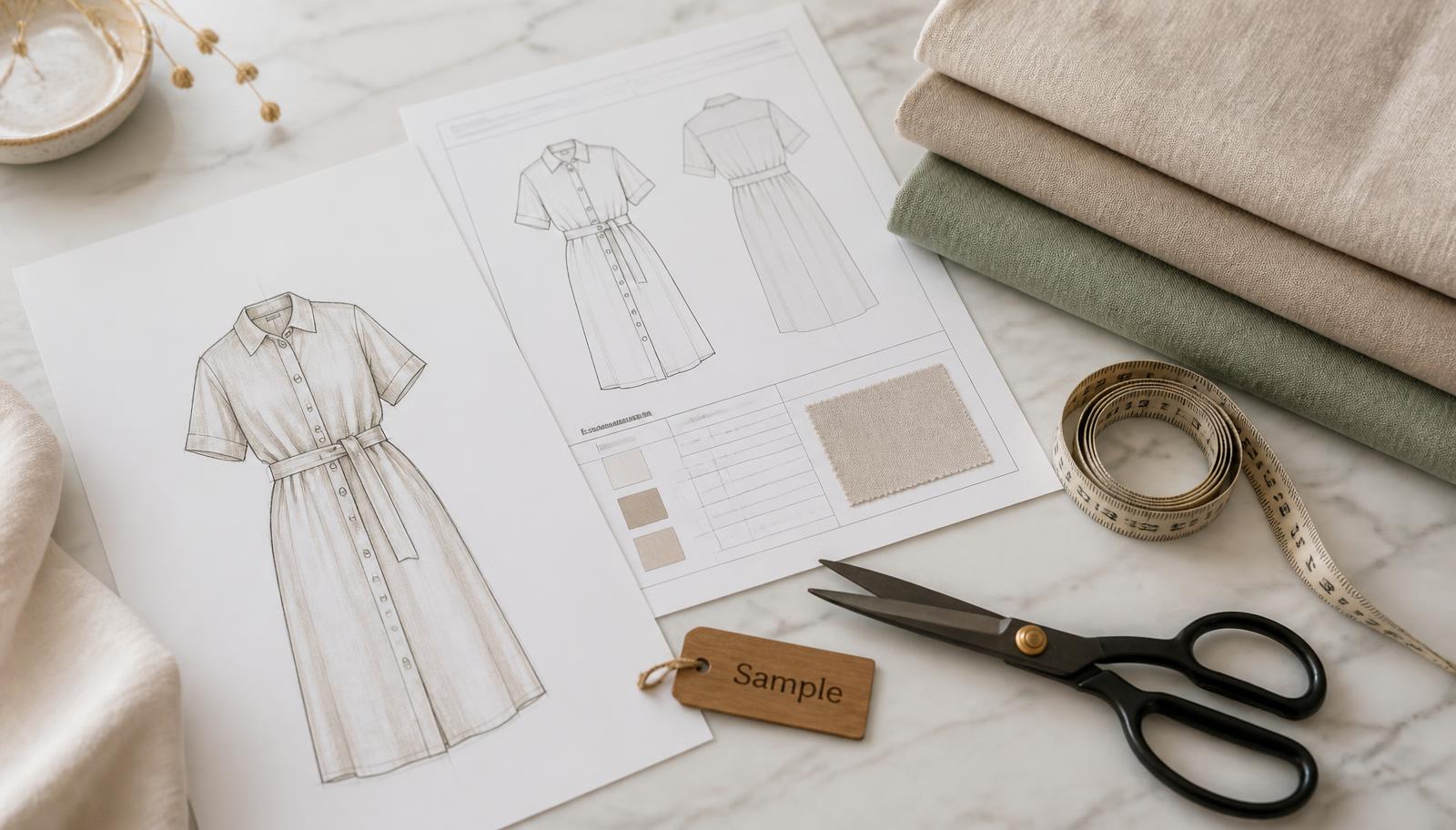
- Tech pack review. We check your sketches, measurements, fabric spec and construction notes. This is where missing information is cheapest to fix.
- Pattern making. A paper or digital pattern is drafted in your base size. For linen, patterns are adjusted up front for expected shrinkage.
- First sample. The first physical garment is sewn. The goal is silhouette and fit, not perfect finishing.
- Revision sample. Changes from your feedback are applied: length, proportions, pocket placement, collar shape, etc.
- Pre-production (PP) sample. The final sample made with bulk-ready fabric and trims. Once approved, production can begin.
Timeline for each stage
| Stage | Typical time | What happens |
|---|---|---|
| Tech pack review | 1–3 days | We confirm measurements, fabric, trims and flag risks. |
| Pattern making | 2–5 days | Base size pattern drafted; linen shrinkage allowance added. |
| First sample | 5–10 days | First garment sewn; fit and silhouette checked. |
| Revision sample | 5–10 days each | Your feedback applied; usually 1–2 rounds. |
| PP sample | 5–10 days | Final sample with bulk fabric, trims and finishes. |
| Total cycle | 3–6 weeks | Depends on revision rounds and fabric sourcing. |
Cost breakdown
Sampling costs fall into three buckets: labour, materials, and logistics. The table below is a realistic range for small-batch linen sampling at a dedicated cut-and-sew workshop.
| Cost item | Typical range | Notes |
|---|---|---|
| First sample labour | $80 – $250 | Complexity drives price: a simple shirt is lower, a lined jacket much higher. |
| Revision sample labour | $40 – $120 | Per round. Minor tweaks cost less; full re-patterning costs more. |
| Fabric for samples | $15 – $60 | Depends on GSM, width and whether the fabric is stocked. |
| Trims and labels | $5 – $30 | Buttons, zips, care labels, hang tags, custom woven labels. |
| Specialist finishing | $10 – $50 | Enzyme wash, stonewash, garment dyeing, softening. |
| Shipping | $20 – $60 | Courier from Dongguan to your address. |
| Typical total | $170 – $570 | For a 2–3 round sampling cycle on a single style. |
These are sample-only costs. They do not include bulk production. The good news: once a pattern and PP sample are approved, the same pattern can be reused across colours and future reorders, which lowers the cost of every subsequent season.
Why linen sampling costs more than cotton
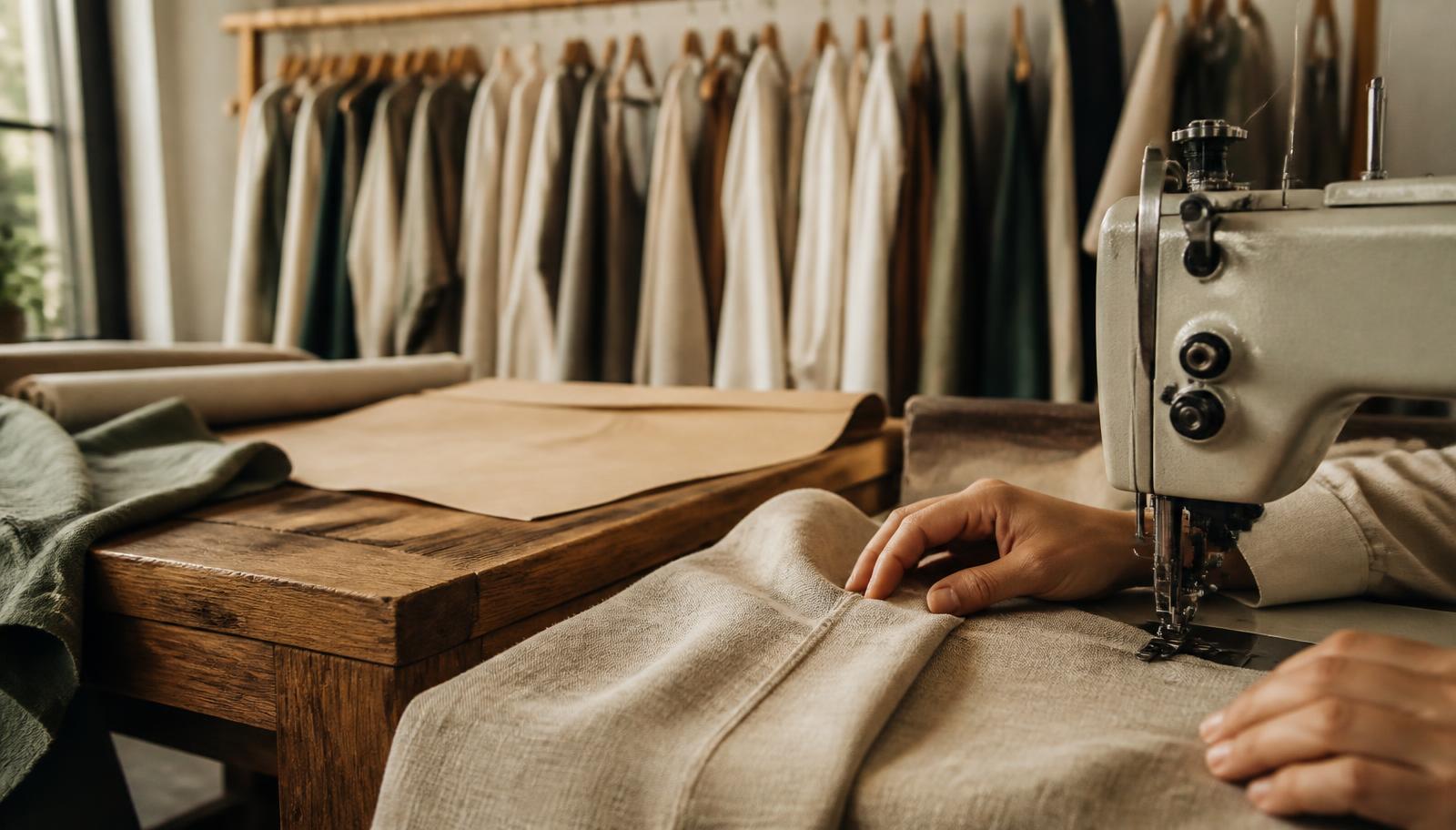
Linen is not difficult to sew, but it behaves differently at every stage:
- Shrinkage. Untreated linen can shrink 3–6% after the first wash. Patterns must be cut larger and then verified on a washed sample.
- Fraying. Linen frays more than cotton, especially at loose weaves. Seam allowances, overlocking and hem finishes need extra attention.
- Creasing. A linen sample straight off the machine looks different from a washed, worn garment. Most brands want to see the finished hand, which means adding a wash step.
- Slub and texture. Linen's natural irregularity can make colour matching and shade approval harder than on a smooth cotton.
These factors add time, not drama. A factory that works with linen regularly builds them into the pattern and process from day one. That is why choosing a linen-specialist manufacturer matters more than choosing the cheapest sample quote.
How to keep sampling costs down
- Send a complete tech pack. Missing measurements are the most common reason for extra revision rounds.
- Include a reference garment. A physical sample you like removes guesswork about fit, length and hand feel.
- Batch your feedback. One clear list of changes per round is far cheaper than three separate "small tweaks."
- Choose stocked fabric. Waiting for a custom-dyed fabric can add 2–3 weeks. Our stocked linen library cuts that to days.
- Limit the first sample to one colour. Approve the silhouette first, then worry about colour options.
- Ask for a digital pattern file. Owning the pattern means faster, cheaper reorders and easier size expansions later.
Red flags that inflate sampling costs
- Vague feedback. "Make it more elegant" is not actionable. Use measurements and reference photos.
- Changing the fabric after the first sample. A new weight or weave usually means a new pattern and a new first sample.
- Skipping the PP sample. Going straight to bulk without a PP sample is the fastest way to get 30 pieces that do not match your approved sample.
- Approving a sample made in the wrong fabric. A cotton substitute sample will not behave like linen in bulk.
From approved sample to small-batch production
Once the PP sample is signed off, the pattern is locked and a purchase order is issued. For apparel at LinenTailor, production starts at 30 pieces per colour. The deposit is usually 30%, with the balance due before shipment. Bulk lead time is 25–35 days for most linen styles, depending on the finish and current line capacity.
If you are working on home textiles instead, the process is similar but the minimums are lower: custom linen bedding, curtains and table linen can be sampled and produced from 1 piece.
Need a sample quote?
Send your tech pack, sketch or reference photo and we will quote the sampling cost within 24 hours. If you are unsure which fabric to specify, upload a reference image to our AI Fabric Match tool or request free swatches from our stocked linen library.