November 13, 2026 · 7 min read
Egyptian Cotton Sateen vs French Linen Bedding: Which Should Your Hotel or Brand Choose?
Egyptian cotton sateen or French washed linen? Compare feel, temperature, wrinkles, shrinkage, care and style for hotels, guesthouses and bedding brands — both made to order from 1 set.
Quick answer
Choose 80s Egyptian cotton sateen for a smooth, cool, lightly lustrous bed that presses crisply — the classic luxury-hotel look. Choose stonewashed French linen for a breathable, textured, relaxed bed that suits warm climates and natural, design-led interiors. Both can be made to order from 1 set in US sizes or made to measure.
Key takeaways
- Egyptian cotton sateen (80s yarn, 600TC) is smoother, silkier and wrinkles less.
- French linen (165 or 230 g/m², stonewashed) is airier, more textured and suits hot sleepers.
- Shrinkage: sateen about 3%; pre-washed linen about 1–3% — we build both into the cut sizes.
- Pick by the bed your guests expect: pressed and polished, or relaxed and natural.
- Not sure? Order 1 set in each fabric, or the paid swatch boxes, and compare by hand.
Two premium fabrics, two very different beds
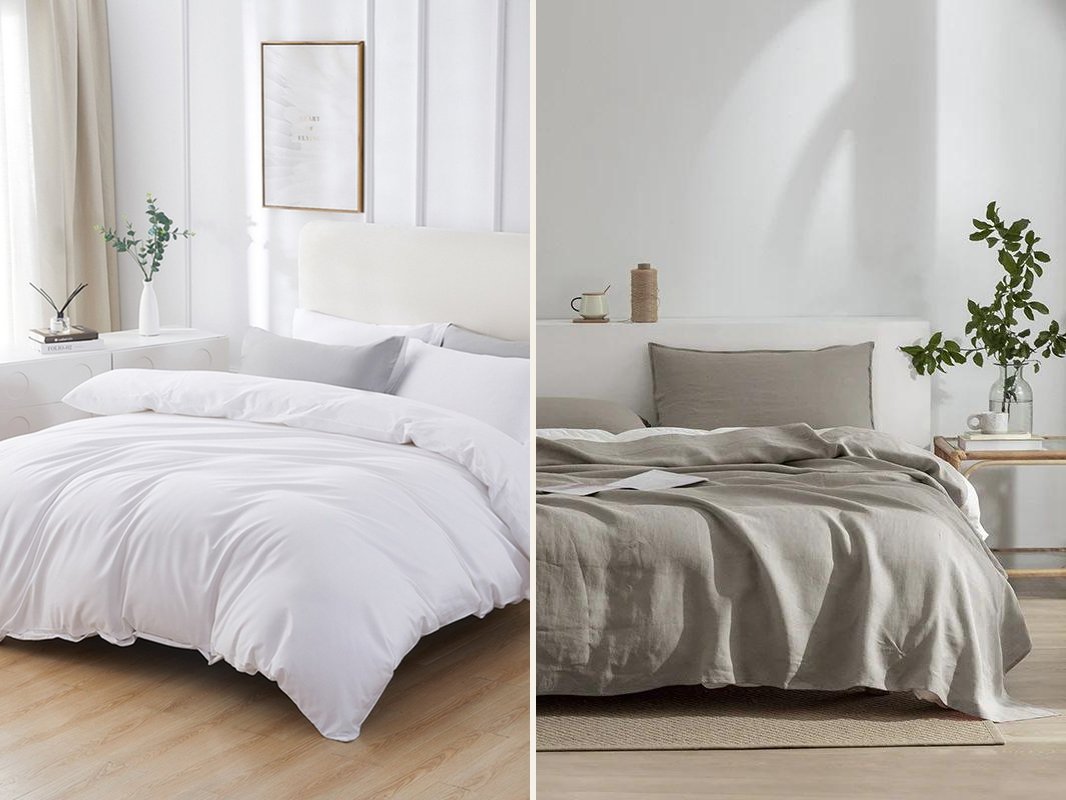
Egyptian cotton sateen and French linen are both natural, premium bedding fabrics, but they create very different sleeping experiences. Sateen is smooth and polished; linen is airy and relaxed. For a hotel, guesthouse or bedding brand, the right choice depends less on which fabric is "better" and more on the bed your guests or customers expect.
What each fabric is
Egyptian cotton sateen
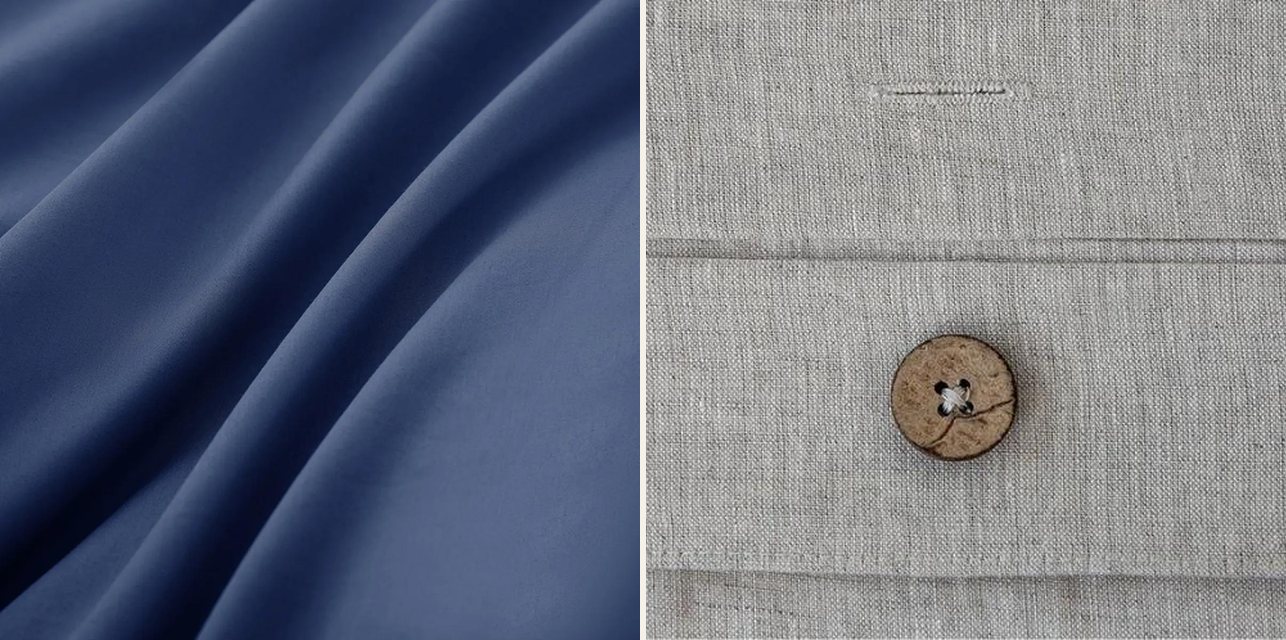
Our bespoke Egyptian cotton bedding uses 100% long-staple Egyptian cotton spun into fine 80s yarn and woven as 600TC sateen. Long, fine fibres leave fewer loose ends, so the surface stays smooth and pills less. The sateen weave floats more yarn on the face, which gives a soft lustre and a fluid, slightly heavier drape.
French washed linen
Our bespoke French linen bedding uses 100% French flax linen, stonewashed (enzyme pre-washed) before cutting. Linen has a natural slubbed texture and a matte surface. It comes in two weights: 165 g/m² for a light, airy feel and 230 g/m² for a denser, fuller drape.
Six differences that matter to buyers
1. Hand-feel
Sateen feels smooth and silky from the first night. Washed linen feels textured and dry-handed at first, then softens with every wash. Guests who love "hotel sheets" usually mean sateen; guests who love a lived-in, natural bed usually mean linen.
2. Temperature and climate
Both fibres breathe. Sateen feels cool at first touch, but its dense weave holds a little more warmth overnight. Linen is the airier choice for hot sleepers, summer rooms and warm or humid climates — especially the 165 g/m² weight. The 230 g/m² weight suits year-round use where you want linen with more substance.
3. Wrinkles and the look of the bed
If your housekeeping standard is a crisp, smooth bed, sateen is easier to keep looking pressed. Washed linen always shows soft creases; that is part of its charm, and ironing is optional. Decide which look matches your rooms and brand photos before you decide on fabric.
4. Shrinkage and fit
Our Egyptian cotton sateen shrinks about 3% after washing. Because our linen is stonewashed before cutting, further shrinkage is about 1–3%. We allow for this in the cut sizes of both — most importantly fitted-sheet pocket depth — so the bedding still fits after laundering. For deep or topper-covered mattresses, send the mattress depth and we cut to it. More detail in our linen shrinkage guide.
5. Care
Egyptian cotton sateen: warm wash and low tumble dry, as on the care label. Washed linen: cool to warm gentle wash with mild detergent and no chlorine bleach, line dry or low tumble dry, and remove while slightly damp.
6. Style and colour
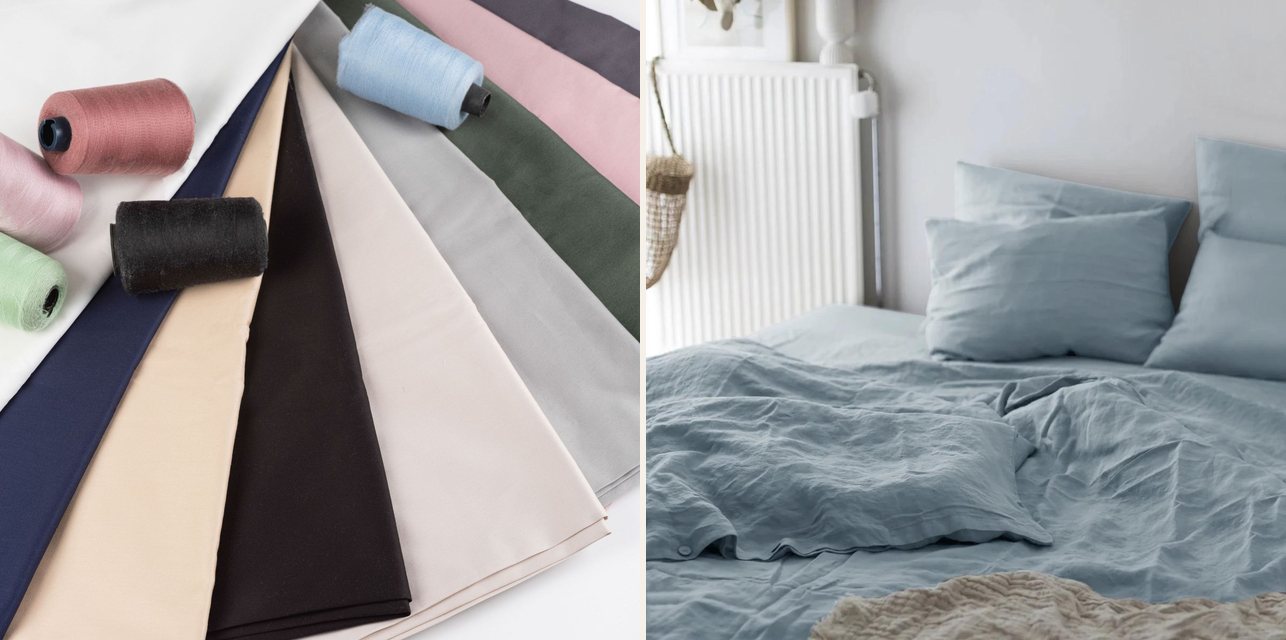
Sateen's sheen makes white, greys and deep colours look rich and even. Linen's slub gives soft, natural colour with gentle variation, which suits earthy and muted palettes. We keep 7 popular stock colours for sateen and 7 for linen, and either can be quoted in your own colour.
Which should you choose?
| Your project | Usually the better fit |
|---|---|
| City or luxury hotel with a classic white, pressed bed | Egyptian cotton sateen |
| Coastal, rural or warm-climate guesthouse | French washed linen (165 g/m²) |
| Design-led boutique hotel with a natural, relaxed style | French washed linen (230 g/m²) |
| Bedding brand selling gift sets with a monogram | Egyptian cotton sateen |
| Natural-living or slow-living bedding brand | French washed linen |
| Not sure yet | Order one set of each and test in a real room |
Some properties mix the two: linen duvet covers for texture with sateen sheets for a smooth sleeping surface. Because both lines start from 1 set, a small test order is easy. For more on equipping smaller properties, read our guide to linen home textiles for boutique hotels and guesthouses.
What is the same in both
- From 1 set or piece — one duvet cover, one fitted sheet or a full set.
- US sizes or made to measure, including deep fitted sheets cut to your mattress depth.
- Monogram or logo embroidery and private labels for hotels and brands.
- OEKO-TEX Standard 100 certified fabric (Product Class I, fabric level); a copy of each fabric certificate is available on request.
- Cut and sewn in our Dongguan workshop, with fabrics from our partner fabric suppliers, and sent by worldwide express shipping. Lead time depends on quantity, sizes and finishing, so we confirm it in your quote.
Get a quote or feel the fabrics
Build your order on the Egyptian cotton sateen bedding page, where base prices per piece are listed by size, or on the French linen bedding page, where linen is quoted on request. Both pages let you pick sizes, colour and embroidery and send the details on WhatsApp or by email; we usually reply within 24 hours. Want to compare by hand first? Ask for the paid swatch box of either fabric — shipping varies by destination, so tell us your country.
Frequently asked questions
- Is Egyptian cotton or linen better for hot sleepers?
- Linen is usually the better choice for hot sleepers and warm, humid climates. It is airy, dries quickly and does not cling, especially in the lighter 165 g/m² weight. 600TC sateen feels cool at first touch but its dense weave sleeps a little warmer.
- Which looks more luxurious on a hotel bed?
- It depends on the look you sell. Egyptian cotton sateen gives a smooth, pressed bed with a soft sheen — the classic five-star look. Stonewashed linen gives a relaxed, textured bed that suits coastal, rural and design-led rooms. Both read as premium when the sizes fit well.
- Which wrinkles less?
- Egyptian cotton sateen. It lies smoother on the bed and presses crisply. Washed linen always shows soft creases; that relaxed look is part of the fabric, and ironing is optional.
- How much does each fabric shrink?
- Our 80s Egyptian cotton sateen shrinks about 3% after washing. Our French linen is stonewashed before cutting, so further shrinkage is about 1–3%. We allow for shrinkage in the cut sizes of both, especially fitted-sheet pocket depth.
- Can I order both fabrics in small quantities?
- Yes. Both bespoke bedding lines start from 1 set or 1 single piece, in US sizes or made to measure, with monogram or logo embroidery available. Many buyers order one set in each fabric to compare before a larger order.
- Can I feel both fabrics before I decide?
- Yes. Each fabric has a paid hand-feel swatch box. Shipping costs vary by destination, so contact us with your country and the colours you want to see, and we will quote the swatch box and shipping.