November 12, 2026 · 8 min read
Linen Apparel Tech Pack Checklist: From First Sketch to Bulk Without Costly Mistakes
A practical linen tech pack checklist: measurements, tolerances, shrinkage notes, seam finishes, trims, labels and packing, plus the sample-to-bulk approval steps.
Quick answer
A linen tech pack needs six things written down before sampling: a measurement chart with tolerances, a grading rule, fabric weight and shrinkage notes, a finish for every seam, trims and label positions, and packing instructions. Linen-specific gaps — no shrinkage note, no wash method, no seam finish — cause most failed first samples.
Key takeaways
- Write a plus/minus tolerance for every point of measure, and say whether it applies before or after washing.
- State fabric GSM and whether it is pre-shrunk; untreated linen typically shrinks 3–7%, pre-shrunk 1–3%.
- Specify a seam finish for every seam — linen frays, so 'standard stitching' is not a spec.
- Mark label, care label and button positions with measurements, not just a sketch arrow.
- Approve a pre-production sample in the bulk fabric before cutting starts.
Why linen tech packs fail more often
Linen has no stretch, frays easily and changes size when washed. A tech pack written for cotton jersey leaves these points open, and the factory has to guess. Each guess is a chance for the first sample to differ from what you imagined.
The six sections every linen tech pack needs
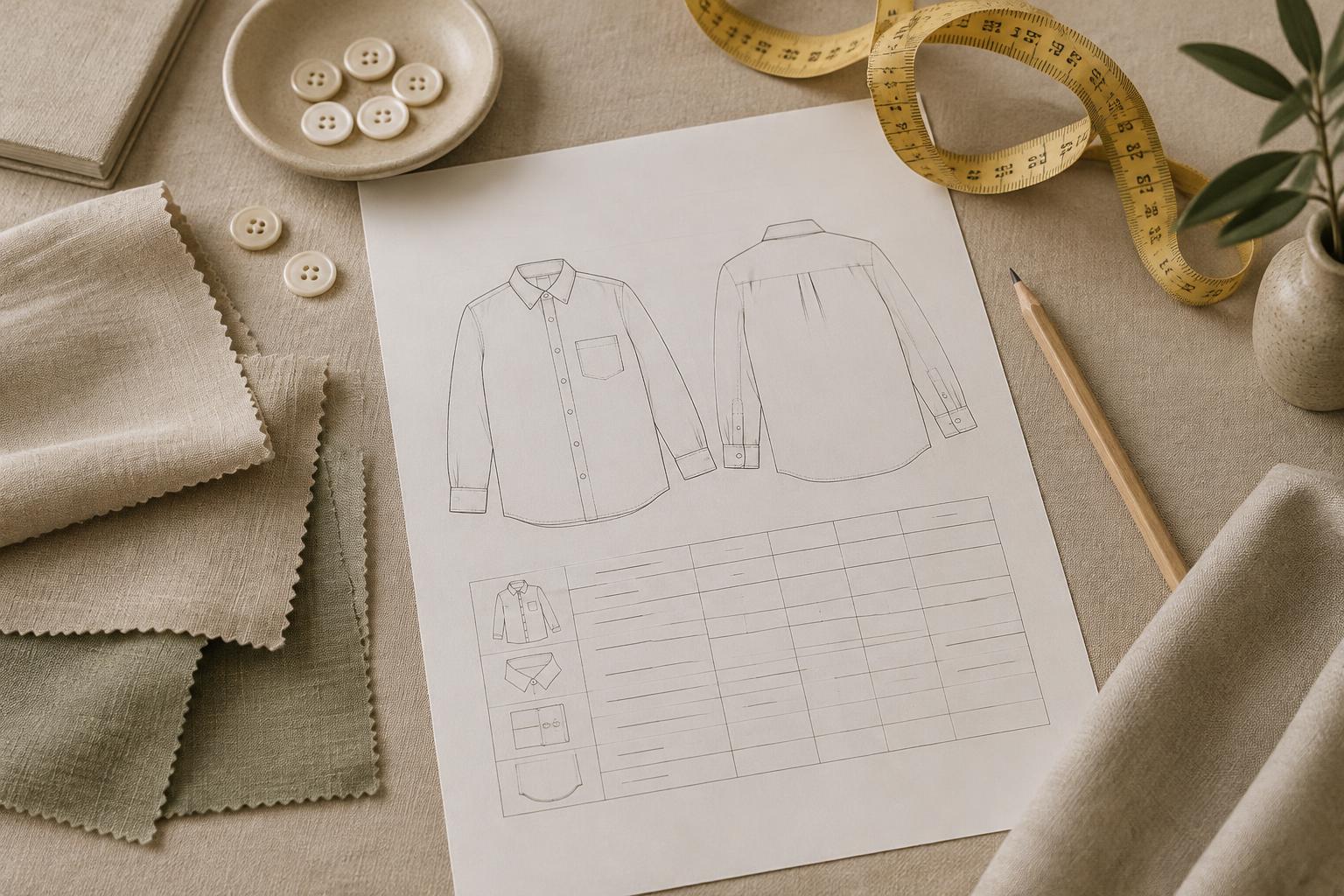
1. Measurement chart (points of measure)
List every point of measure for your base size — chest, waist, hip, body length, sleeve, shoulder, armhole, hem sweep — with a plus/minus tolerance for each. Because linen does not stretch, allow enough ease at chest, seat and armhole for movement.
2. Grading rule
Give the increment between sizes for each point of measure, or a full graded chart from XS to XL. Sizes can be mixed within the 30-piece-per-colour minimum, so the chart should cover every size you plan to order.
3. Fabric, weight and shrinkage
Name the fabric composition and weight in GSM, and state whether it is pre-shrunk or garment-washed. Write the wash method used for the shrinkage test and whether your measurements are before or after washing. See our linen shrinkage guide and linen GSM chart.
4. Construction and seam finishes
Specify a finish for every seam: French or bound seams for unlined pieces, flat-felled seams for trousers and workwear, and overlock where the seam is hidden. Add hem width and fold type, stitch density, and buttonhole size with placket interfacing.
5. Trims and labels
List buttons (material, size, colour), thread colour, zips, main label, size label and care label, each with a placement measurement. Care labels should list the fibre composition and wash instructions you have tested.
6. Packing and shipping
Say how each piece is folded and bagged, how hang tags are attached, and how cartons are marked. Orders ship by worldwide express shipping; packing instructions written in advance avoid repacking.
From sample to bulk: four approval steps
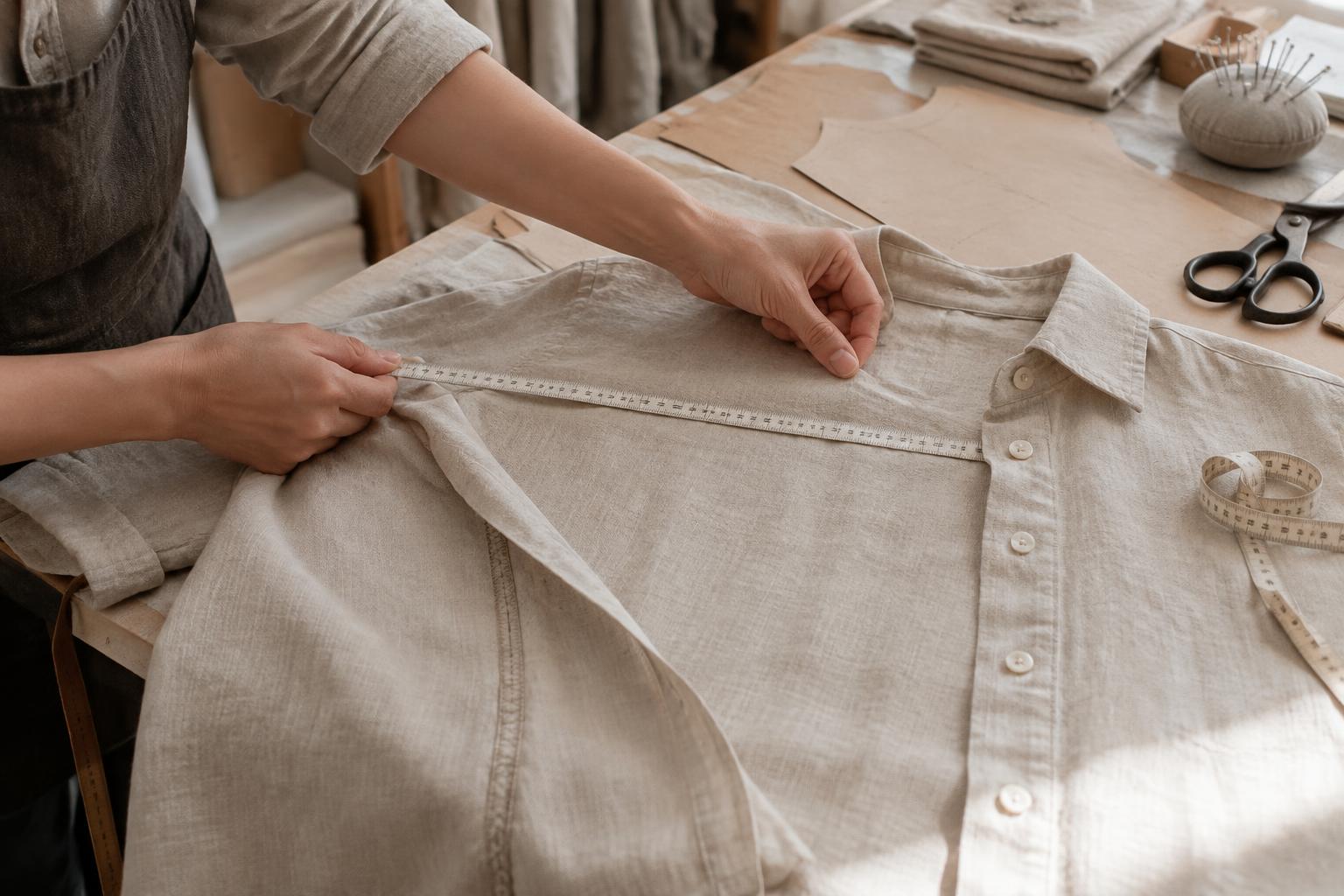
- Fit sample — check fit and proportion; send one consolidated, measurable comment list.
- Pre-production sample (PPS) — made in the bulk fabric, trims and labels.
- Sealed sample — the approved PPS becomes the reference for production and inspection.
- Bulk — from 30 pieces per colour, inspected against your tolerances. See how we read defects in our AQL inspection guide.
For more on why first samples go wrong, read how new brands avoid failed samples.
Common gaps and fixes
| Gap in the tech pack | What goes wrong | What to write instead |
|---|---|---|
| No shrinkage note | Garments come out shorter after the first wash | Fabric pre-shrunk yes/no, wash method, measure after wash |
| No seam finish | Raw edges fray inside unlined garments | French, bound or flat-felled seam per seam |
| No tolerances | No objective pass/fail at inspection | ± value for every point of measure |
| Hem not specified | Uneven or rippled hems on lightweight linen | Hem width and fold type |
| Buttonhole spec missing | Loose weave tears at buttonholes | Buttonhole length, interfacing at placket |
| Label position vague | Labels sewn in different places | Distance from seam in cm or inches |
Send us your tech pack
LinenTailor runs a cut-and-sew workshop in Dongguan, China, with fabrics sourced from trusted linen mills. OEKO-TEX Standard 100 certified linen and organic cotton certified fabrics are available on request. Send your tech pack or sketch on WhatsApp for a quote within 24 hours, or browse the linen fabric library.
Frequently asked questions
- Can I start without a professional tech pack?
- Yes. A clear sketch, a base-size measurement chart, reference photos and your fabric choice are enough to start. We turn that brief into patterns, but the more you specify in writing, the fewer sample rounds you need.
- What must a linen tech pack include that a cotton one might skip?
- Fabric weight (GSM), whether the fabric is pre-shrunk, the wash method for the shrinkage test, and whether measurements are taken before or after washing. Untreated linen typically shrinks about 3–7%; pre-shrunk linen typically about 1–3%.
- Which seam finishes suit linen garments?
- Linen frays easily, so specify the finish for every seam: French seams or bound seams for unlined shirts and dresses, flat-felled seams for workwear-style trousers, and overlock only where the seam is hidden by a lining.
- How is the sample fee handled?
- Sampling is quoted separately because it covers pattern making and one-off sewing. The sample fee is refunded as a credit once bulk orders for that style reach 150 pieces in total.
- What is the minimum order after the sample is approved?
- Apparel bulk starts from 30 pieces per colour per style, and sizes can be mixed within each colour.
- Should measurement tolerances be written in the tech pack?
- Yes. Write a plus/minus tolerance for every point of measure and state whether it applies before or after the agreed wash test. Without written tolerances, final inspection has no objective standard.