August 28, 2026 · 10 min read
How to Choose the Right Cotton-Linen Fabric for Your Product (Jackets, Dresses, Shirts, Trousers & Hotel Linens)
A product-by-product guide to specifying cotton-linen fabric: the blend ratio, GSM, weave and finish to choose for jackets, dresses, shirts and trousers, plus sheets and hotel tablecloths — with the exact wording for your tech pack.
Key takeaways
- Decide in this order: product → blend ratio → GSM → weave → finish. Changing the order is why most first samples fail.
- Blend rule of thumb: 55/45 linen-cotton for shirts and dresses (softer, less creasing), 70/30 or 100% linen for jackets and trousers (more body and structure), 60/40 or higher cotton for hotel table linen and sheets (easier laundering).
- Weight rule of thumb: shirts 120–160 GSM, dresses 150–190 GSM, trousers 190–240 GSM, unstructured jackets 230–280 GSM, sheets 160–200 GSM, tablecloths 200–260 GSM.
- Always approve a washed sample, not greige fabric: cotton-linen typically shrinks 3–6% and loses 5–10% of its greige weight after finishing.
- For hospitality, prioritise industrial-wash durability and colourfastness over hand feel — 60°C washing and repeated pressing decide the lifespan.
- LinenTailor produces cotton-linen apparel from 30 pieces per colour and home textiles from 1 piece, with free swatches shipped worldwide.
Most cotton-linen sampling problems are not sewing problems — they are specification problems. A dress cut from jacket-weight cloth, a hotel tablecloth that fades after twenty industrial washes, a shirt that looks perfect on the roll and crumples on the shop floor: each one traces back to a fabric choice made before the pattern existed. This guide walks through how we specify cotton-linen for the products we actually make every week: jackets, dresses, shirts and trousers, plus sheets and hospitality table linen.
Decide in this order
- Product and silhouette. A gathered dress and a tailored trouser want opposite properties. Start here, never with a fabric you liked at a fair.
- Blend ratio. Linen brings dry hand, breathability and lustre; cotton brings softness, crease recovery and easier sewing and dyeing.
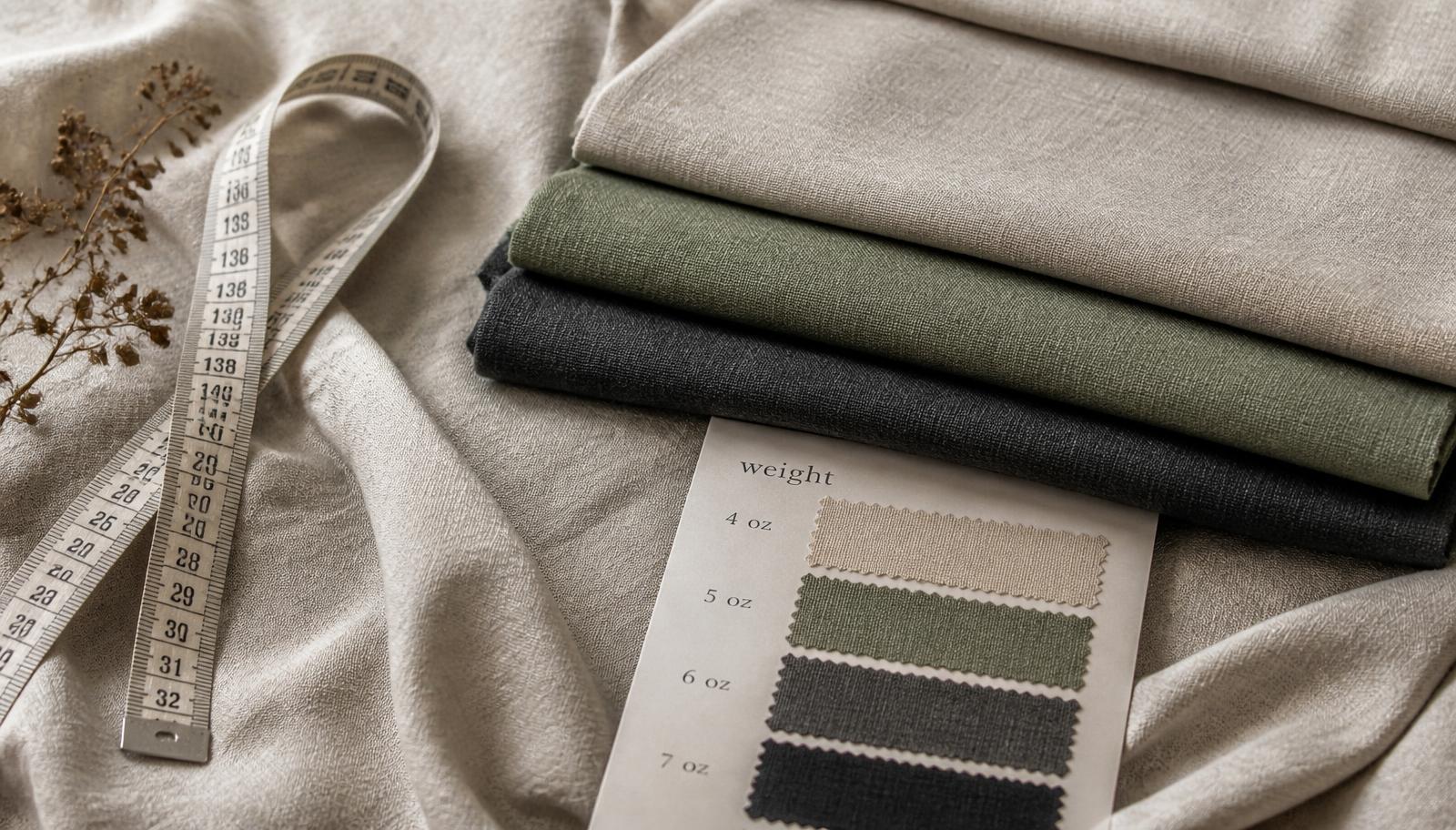
- Weight (GSM). This decides opacity, drape and how the garment hangs after an hour of wear.
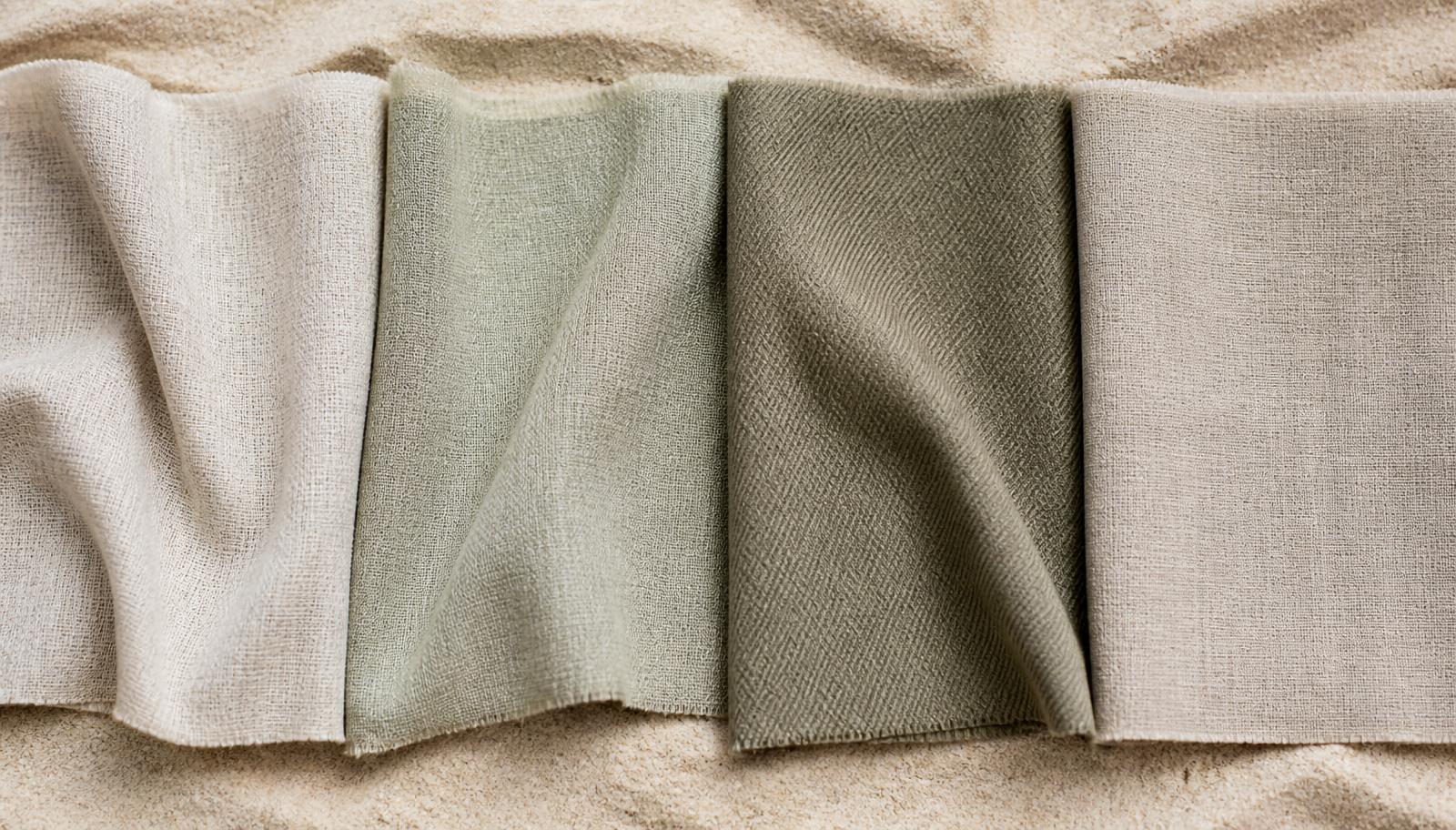
- Weave. Plain for crispness, twill for drape and durability, herringbone for texture, slub for a handmade look.
- Finish. Enzyme wash, stonewash, sanforising or easy-care — the finish changes hand, shrinkage and price more than most buyers expect.
Cotton-linen selection chart by product
| Product | Blend | GSM | Weave | Finish |
|---|---|---|---|---|
| Shirts, blouses | 55/45 linen-cotton | 120–160 | Plain, fine slub | Enzyme washed, sanforised |
| Dresses, skirts | 55/45 or 45/55 | 150–190 | Plain or light twill | Stonewashed for softness |
| Trousers, shorts | 70/30 linen-cotton | 190–240 | Twill, herringbone | Sanforised, mechanical softening |
| Unstructured jackets, overshirts | 70/30 or 100% linen | 230–280 | Twill, canvas | Piece-dyed or garment-dyed |
| Bed sheets, duvet covers | 55/45 linen-cotton | 160–200 | Dense plain | Stonewashed, pre-shrunk |
| Hotel tablecloths, napkins | 40/60 linen-cotton | 200–260 | Dense plain or twill | Reactive dyed, easy-care, sanforised |
Apparel: what actually goes wrong
Jackets and overshirts
The failure mode is collapse. A cotton-linen below 220 GSM cannot hold a shoulder or a lapel roll without heavy fusing, and heavy fusing kills the reason people buy linen outerwear. Specify 230–280 GSM in a twill or canvas, keep the linen share at 70% or above for body, and garment-dye if you want the lived-in look without adding weight.
Dresses
The failure mode is the wrong drape for the silhouette. Tiered, shirred and bias shapes want 150–170 GSM with a soft stonewashed finish; A-line, shirt dresses and anything with structure at the shoulder want 170–190 GSM. If the dress is unlined and pale, check opacity on a washed swatch held against skin, not against a lightbox.
Shirts
The failure mode is creasing complaints. Cotton is your lever: 45–50% cotton, a finer yarn and a denser plain weave cut visible creasing sharply while keeping the fabric breathable. 140 GSM is the safest all-season shirting; drop to 120 GSM only for hot-climate markets.
Trousers
The failure mode is seat bagging and abrasion at the inner thigh. Choose 190–240 GSM in a twill or herringbone rather than a plain weave, insist on sanforising, and ask for a Martindale abrasion figure if you are selling into a market that returns heavily worn goods.
Home and hospitality: specify for the laundry, not the showroom
The smaller part of our output is home textiles, and it follows different rules. Domestic bedding can be chosen on hand feel — 160–200 GSM, 55/45, stonewashed, and customers are happy from the first night. Hotel linen cannot. Tablecloths and napkins are washed at 60°C with alkaline detergent, tumbled and pressed hundreds of times a year, so:
- Raise the cotton share to 55–60% for wet strength and easier pressing.
- Use 200–260 GSM in a dense plain or twill — light table linen telegraphs the table surface and wears at the folds.
- Specify reactive dyeing and request colourfastness to washing grade 4 or better; avoid pigment prints on high-turnover items.
- Pre-shrink properly. A tablecloth that shrinks 6% no longer fits the table it was made for.
- Order one piece first. Our home-textile MOQ is 1 piece precisely so a property can wash-test before committing.
The five lines your tech pack needs
- Blend: "55% linen / 45% cotton" — never just "cotton-linen".
- Weight: finished GSM after washing, with a tolerance (e.g. 170 GSM ±5%).
- Weave and width: e.g. "plain weave, 145 cm usable width".
- Finish: enzyme washed / stonewashed / sanforised / yarn-dyed, plus accepted residual shrinkage (e.g. ≤3%).
- Approval: signed lab-dip and a washed swatch attached to the file.
If you are unsure which weight matches your reference garment, our linen GSM chart maps every range to a product, and pure linen vs blends covers the trade-offs in more depth.
How to test a blend before you commit
- Crush test: hold a swatch in a fist for 30 seconds and release. What you see is what your customer sees after lunch.
- Wash test: wash and dry the swatch exactly as your customer will, then measure shrinkage and re-check hand.
- Opacity test: lay the washed swatch over skin or over the intended lining.
- Seam test: sew a mock side seam and press it. Loose weaves fray and grin at the seam long before the fabric fails.
Not sure where to start? Upload a reference photo to our AI Fabric Match tool and it will shortlist cotton-linen qualities from our library, or browse the fabric range and request free swatches.
Making it in small batches
You do not need mill-level volumes to get the right blend. LinenTailor is a small-batch manufacturer: apparel starts at 30 pieces per colour, home textiles at 1 piece, and stocked cotton-linen can be bought by the metre or by the roll for sampling. That means you can test two blend ratios side by side, keep the winner, and scale it — instead of gambling a season on one spec sheet.
Frequently asked questions
- What is the best cotton-linen blend ratio for clothing?
- For shirts, blouses and dresses, 55% linen / 45% cotton is the most reliable blend: it keeps the dry linen hand and breathability while cotton reduces creasing and improves sewability. For trousers and jackets, choose 70/30 linen-cotton or 100% linen for more body. For kidswear and hot-climate basics, 45/55 linen-cotton is softer against the skin.
- What GSM should I choose for a cotton-linen jacket?
- Unstructured cotton-linen jackets and overshirts work best at 230–280 GSM. Below 220 GSM the shoulder and lapel collapse without heavy interlining; above 300 GSM the fabric becomes stiff and reads more like workwear or upholstery.
- Does cotton-linen shrink?
- Yes. Untreated cotton-linen typically shrinks 3–6% in length after the first wash, more in loose weaves. Pre-shrinking (sanforising) or garment washing brings residual shrinkage under 3%. Always cut patterns from a washed, finished sample and state the accepted residual shrinkage on your tech pack.
- Is cotton-linen good for hotel tablecloths and bedding?
- Yes, if you specify for laundering rather than for hand feel. Hotel tablecloths perform best at 200–260 GSM with a cotton-rich blend (60% cotton or more), a dense plain or twill weave, and reactive dyeing for colourfastness at 60°C. Bedding sits at 160–200 GSM, usually 55/45 linen-cotton, stonewashed for immediate softness.
- How do I stop cotton-linen from creasing so much?
- Increase the cotton share, choose a tighter yarn and a denser weave, add a mechanical softening or enzyme wash, or specify a light easy-care finish. A 45/55 linen-cotton at 160 GSM creases visibly less than a 100% linen at the same weight, without losing breathability.
- What should I write on the tech pack for cotton-linen?
- Specify five things: blend ratio (e.g. 55% linen / 45% cotton), finished GSM after washing, weave (plain, twill, herringbone, slub), width in cm, and finish (enzyme washed, stonewashed, sanforised, piece-dyed or yarn-dyed). Add accepted shrinkage and colourfastness grades, and attach a signed lab-dip and washed swatch.
- What is the minimum order to develop a cotton-linen product?
- At LinenTailor, cotton-linen apparel production starts at 30 pieces per colour and home textiles start at 1 piece. Stocked fabrics can be bought by the metre or by the roll, so you can sample a blend before committing to a bulk order.